
Dec. 22, 2025, 5:03 a.m. ET
We are in a season of giving, but one trendy giveaway idea has actually been making the political rounds for months.
Several states have been talking about doing away with property taxes – among them, Illinois, Kansas, North Dakota, Ohio, Pennsylvania and my home state of Florida.
It seems like a tantalizing gift for long-suffering property owners: Imagine being free of those pesky payments that are either rolled into monthly mortgage bills or come due annually.
Unfortunately, it’s about as realistic as believing in Santa Claus.
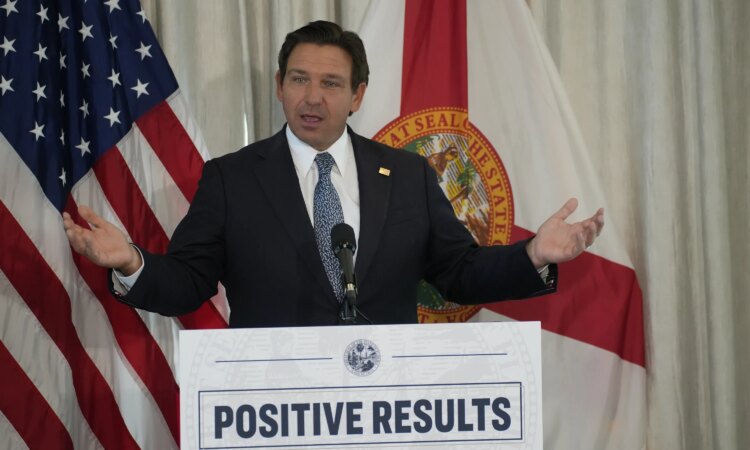
Florida Gov. Ron DeSantis‘ plan to cut property taxes is hypocritical

Ron DeSantis, who’s about to enter his final year as Florida’s governor, is particularly keen on this concept. He’s come up with a proposal to abolish property taxes on all “homesteaded” land – that is, land considered “permanently” occupied by its owners.
That would still leave property taxes in effect for commercial properties, vacation rentals and the homes of seasonal visitors who don’t claim Florida residency.
By DeSantis’ estimate, about 30% of Florida’s total property tax base would be exempted under his proposal. He said it’s the kind of relief taxpayers across the country need to counterbalance rising home affordability costs.
As property values have risen in Florida in recent years, local governments throughout the state have been able to collect more revenue, even if they haven’t raised their tax rates.
In a recent interview on Fox Business, the governor said property tax revenues in Florida have grown from $32 billion in 2019 to $56 billion in 2025.
“The reality is, these local governments have overspent,” DeSantis said. “And people are paying more and more for that. And at some point it’s like, when is enough enough?”
Of course, if local government spending increased by $24 billion over the past six years, some might wonder how much the Florida government’s spending went up during the same time frame. The answer? More than $26 billion.
The budget DeSantis signed for this fiscal year included $117.4 billion in spending, up from $90.98 billion in 2019-20.
Bear in mind that the commissioners and council members who oversee local governments in Florida’s 67 counties could only control the spending within their individual jurisdictions. As governor, DeSantis had the ability to wield his veto pen over any state spending he saw fit.
Viewed in that context, DeSantis’ complaints about local government spending seem hypocritical. His idea of doing away with property taxes on homestead properties seems impractical, too.
Most people understand the concept of ‘no free lunch’

Yes, people hate paying taxes. Most also would hate being mugged, watching their homes burn to the ground, driving along potholed roads, or making do with rundown parks and libraries. Local governments provide services, funded largely by property taxes, to prevent those kinds of things from happening.
Anyone who’s run an organization of any size understands that cutting 30% of its budget would seriously impact its operations. Florida’s legislature has limited the other legal methods local governments can use to raise revenue, so taking away the ability to collect property taxes would further shackle them.
No one wants to return to the days when small country towns tried to balance their budgets by issuing excessive numbers of speeding tickets to unsuspecting motorists.
DeSantis said the state will come up with solutions to help local governments avoid financial crises. That’s not particularly reassuring, since he’s been talking about this for months and hasn’t offered any specifics yet.
“Stay tuned for additional information on this, which will be coming soon,” the governor’s press secretary, Molly Best, emailed me when I asked for more details.
In general, there are two reasons why political leaders want to delay discussing details: Either they don’t have details to share yet, or they have them, but they’re going to be very unpopular with constituents.
In an interview on Fox & Friends this month, DeSantis said state government could “backfill” the budgets for 32 rural counties. But why those counties? How and for how long? Why not the other 35?
And if state government can afford to do that much “backfilling,” it begs the question about which government has actually been collecting more money than it needs.
Home prices will go up, along with other expenses
Leaving all these other issues aside, the biggest problem is that DeSantis’ proposal wouldn’t really help home affordability.
According to an analysis by Realtor.com, average home prices in Florida would increase 7% to 9% if the governor’s proposal were adopted. That only stands to reason. If the expense of paying property taxes is one of the factors weighed in determining a home’s value, removing property taxes would make the home’s value increase.

If property taxes are eliminated on homesteaded properties and no other revenue options are available, local governments are likely to increase the tax rates on commercial and rental properties to make up the difference. That’ll translate into higher apartment rental rates, more expensive vacation rentals and higher overhead costs for private businesses – all of which would be bad for Florida’s economy.
Now imagine trying to pull the same proposal off in a state with significantly fewer vacation and seasonal properties. If the numbers won’t work in Florida, they probably won’t work anywhere.
The Florida Legislature is planning to consider several property tax reduction proposals in 2026 that are more modest in scope than DeSantis’ plan, but without providing sufficient replacement revenue for cities and counties, they are no more realistic.
For any of the property tax reduction ideas to become law, it would have to be approved by at least 60% of the state’s voters in a referendum. Those voters would likely ask: If this could be done without serious consequences, why wasn’t it done years ago?
Even in a season of miracles, that question stresses suspension of disbelief past any reasonable limits.
Blake Fontenay is USA TODAY’s commentary editor.


