
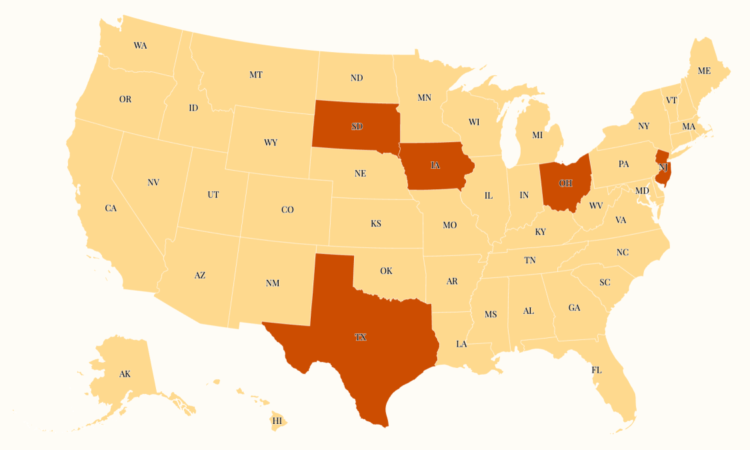
As the battle against rising property taxes continues across the country despite setbacks and growing concerns from experts and local governments, at least five states have included some form of relief for local homeowners in their fiscal year 2027 budgets, or are anyway set to introduce cuts by next year.
Some of these states are trying to cut property tax bills for all residents, while others are expanding homestead exemptions. Somewhere else in the country, lawmakers are debating whether to completely eliminate property taxes at the state level—even as prospective huge losses in revenues for municipalities and local governments threaten to kill or undermine key public services.
The Recent Hikes Now Squeezing US Homeowners
Property taxes have risen in step with home values over the past few years, surging by over 30 percent between 2019 and 2025, according to the latest data by Harvard University’s Joint Center for Housing Studies (JCHS).
This is a slightly less dramatic increase than that reported by home prices, which since 2020 jumped by 54 percent nationwide and by more than 50 percent in 73 of the nation’s 100 largest markets, researchers reported. This price hike has largely been the result of the home-buying frenzy unleashed by historically low borrowing costs during the pandemic, which clashed with a chronic lack of inventory across the country.
Unfortunately, home prices and property values are only two of the factors that conjured up the current housing affordability crisis in America. Between 2019 and 2025, the country’s average monthly insurance premiums increased by 72 percent to $201, according to JCHS, due to the growing threat posed by more frequent and more severe natural disasters and the rise in cost of materials used to reconstruct damaged and destroyed properties.
Mortgage rates shot up to heights of 6 to 7 percent after the Federal Reserve started its aggressive rate-hiking campaign to stop the rise of inflation in 2022, and they remain nearly double their pandemic lows now.
Overall, it has become much more difficult for Americans to step onto the property ladder—and homeownership has become a lot more expensive for those who had already stepped on it.
The US Property Tax Revolt
The additional financial burden posed on homeowners by higher property tax bills has pushed lawmakers across the country, especially in GOP-led states, to discuss ways to offer them relief.
After much back-and-forth between Governor Ron DeSantis and House Speaker Daniel Perez, the Florida legislature recently backed a property tax cut proposal that would be put to voters in November. If passed, the measure will raise the primary residence homestead exemption to $150,000 in 2027 and $250,000 in 2028, while capping annual assessment increases for non-homestead properties at 5 percent.
In Indiana, a bill that would completely phase out property tax payments by 2028, funded by a significant expansion of the state sales tax, is lingering in the House, though it is barely alive.
But in a handful of states, some form of relief—often partial, often debated—is incoming.
Where Homeowners Can Expect Relief Soon
New Jersey
In New Jersey, lawmakers have focused on older homeowners, inserting in the state’s $60.7 billion budget property tax relief totaling over $4.1 billion, according to Democratic Governor Mikie Sherrill.
The budget includes a revamped version of the Stay NJ program, which offers property tax benefits to eligible homeowners aged 65 and older. Through the changes inserted in the budget, qualifying taxpayers would receive benefits totaling half their property tax bill, up to certain thresholds determined by their income.
Those with an annual household income from over $150,000 to $200,000 would receive up to $4,000 on a tax year basis; those earning more than $100,000 up to $150,000 would receive up to $5,000 on a tax year basis; and those earning $100,000 or less would receive the maximum benefit of up to $6,500 on a tax year basis.
The income eligibility threshold would be capped at $200,000.
South Dakota
Two laws aimed at reducing property taxes were signed into law by South Dakota Governor Larry Rhoden in March, and are expected to bring relief to local homeowners in 2027.
Rhoden described the combined effect of the two bills, which both allow higher sales tax revenue to be applied toward the reduction of homeowners’ property taxes, as “the largest property tax cut in South Dakota history,” according to South Dakota Searchlight.
One law is expected to collect an estimated $114 million in additional sales taxes annually by allowing the state sales tax rate to rise from 4.2 percent to 4.5 percent in 2027. This additional money would be used to fund the state education system, so that school district property taxes can be lowered by an equivalent amount.
Before the sales tax increases take effect, the state is planning to use $56 million from its reserve funds to get the relief effort rolling.
The other law—proposed by Rhoden—will also help generate additional tax revenues, allowing counties to introduce a new optional sales tax of up to 0.5 percent to offset lower property taxes for local homeowners. This relief would appear as credit on their bills.
The governor’s office has estimated that in counties that adopt the 0.5 percent sales tax, homeowners will save another 10 to 25 percent in property taxes, or an average savings of $660 per homeowner.
His office, however, did not share estimates of how much residents will spend on additional and new sales taxes. Under questioning by South Dakota Searchlight, the state’s Bureau of Finance and Management Commissioner Jim Terwilliger told the newspaper that the optional county sales tax alone would cause him to spend an additional $160 in sales taxes each year for his four-person family.
South Dakota’s 2027 state budget totals approximately $7.47 billion, up by a little over 2 percent from the year that just ended. Some $69 million actually remained from the 2026 fiscal year budget, which the state has transferred to its reserve funds for future “one-time investments,” Rhoden’s office said.
Iowa
Iowa Governor Kim Reynolds signed a sweeping overhaul of the state’s property tax system and local budgets in May, known as SF 2472.
Among several changes, the legislation replaces the existing homestead credit with a permanent exemption set at 10 percent, including a minimum of $5,500 and a cap of $20,000, which will be indexed for inflation.
It imposes a 2 percent “hard cap” on annual revenue increases for general city and county levies, with some exceptions like debt service and school funding. And it establishes a new tax-advantaged savings program for first-time homebuyers, called FirstHome Iowa Program.
The legislation, which is set to take effect on January 1, 2027, will save homeowners in the state $4.2 billion in taxes over six years, according to estimates by the governor’s office.
But it is also likely to widen the existing gap between the state’s revenues and expenses. For fiscal year 2027, Iowa lawmakers approved a $9.65 billion state budget, slightly higher than the fiscal year 2026 budget of $9.51 billion. The state is expecting to bring in $8.47 billion in revenue in fiscal year 2027, leaving a gap of approximately $1.2 billion.
According to the Des Moines Register, Iowa lawmakers will fill this gap by using the state’s budget surplus and the Taxpayer Relief Fund.
Ohio
Ohio Governor Mike DeWine signed a law on June 24 allocating $350 million to provide property tax relief to older and disabled homeowners in the state receiving the homestead exemption. This is given to seniors and people with disabilities who earn less than $41,000.
According to Cincinnati.com, this law will allow roughly 710,000 Ohioans to save nearly $500 next year. The $350 million was appropriated from the fiscal year 2026-2027 budget approved on July 1, 2025, which totaled approximately $201.3 billion.
The one-time tax cut will be funded with part of a $1.5 billion budget surplus, according to officials. No more is planned to help struggling Ohio homeowners, for now: grassroots efforts to bring the question of abolishing property taxes in the state to voters fell short for the November ballot.
Organizers of the movement, the Committee to Abolish Ohio Property Taxes, said they will try to bring the issue to voters in the November 2027 election, as reported by The Columbus Dispatch.
Texas
Texas is currently operating under a historic $338 billion biennial budget that will fund state operations through August 2027. Property tax relief is definitely a priority for the legislature, which has allocated $51 billion in school property tax cuts passed since 2019.
But Governor Greg Abbott and Lieutenant Governor Dan Patrick have offered different visions of how to offer relief to homeowners in 2027.
Patrick has proposed expanding the current $140,000 homestead exemption up to $180,000; Abbott has proposed eliminating school property taxes for homeowners, lowering the statewide homestead appraisal cap from 10 percent to 3 percent, and limiting the power of local government to increase property taxes, including by requiring two-thirds voter approval for local tax increases.
The 90th legislature, which will convene on January 12, 2027, will decide which of these two approaches will prevail. Meanwhile, Texas’s top elected officials announced on Wednesday that state agencies, appellate courts and universities will have to cut spending by 3 percent in their budget requests for the next two years “as a starting point for budget deliberations.”
These cuts, Abbott and Patrick said in a letter dated July 14, are “necessary to maintain Texas’ strong fiscal position.” K-12 public education funding and Texas’ new private school voucher program are exempted.
Contact Newsweek editors on this story: Ben Kelly and James Debens


