Korean currency slides due to lingering tensions in Middle East, sharper-than-expected U.S. inflation
Published: 13 May. 2026, 11:35
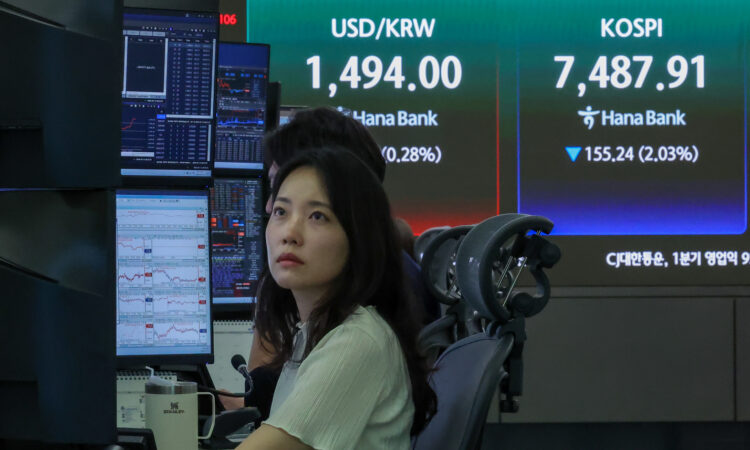
![A screen in Hana Bank's trading room in central Seoul shows the dollar-won rate and Kospi opening on May 13 [NEWS1]](https://koreajoongangdaily.joins.com/data/photo/2026/05/13/7f2744c9-7aaa-403a-bb84-f8d20eb331aa.jpg)
A screen in Hana Bank’s trading room in central Seoul shows the dollar-won rate and Kospi opening on May 13 [NEWS1]
The won weakened sharply against the dollar on Wednesday amid lingering uncertainties in the Middle East and sharper-than-expected U.S. inflation.
The Korean currency opened at 1,493.8 won per dollar, or 3.9 won weaker than the previous session’s close.
The won has shown heightened volatility in recent sessions due to a lack of progress in Washington-Tehran talks regarding ending the war.
The won reached 1,489.9 won on Tuesday, its weakest level since April 4, when the dollar-won rate was quoted at 1,504.2 won.
Overnight U.S. data showed that consumer prices rose sharply for the second straight month in April, marking the largest annual increase in inflation in nearly three years and raising expectations that the U.S. Federal Reserve would keep interest rates unchanged for the time being.
Concerns that the U.S.-Iran war could continue also pushed the price of West Texas Intermediate crude above $102 per barrel.
Higher oil prices have pressured the won by increasing demand for dollars for crude imports, as Korea relies heavily on imports to meet its energy needs.
Amid heightened tensions, the benchmark Kospi fell 2.46 percent to 7,447.17 as of 9:30 a.m. on Wednesday, weighed down by heavy foreign selling.
Yonhap