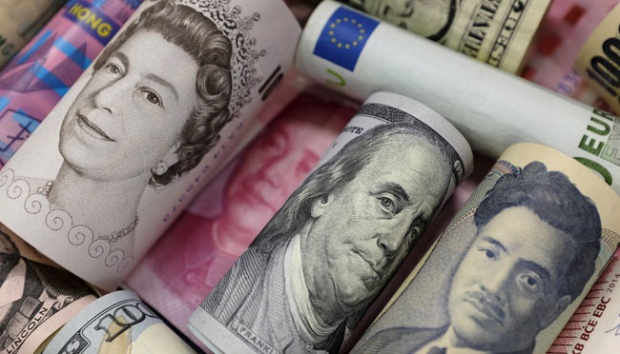
TEMPO.CO, Jakarta – Currencies and exchange rates serve as more than just fluctuating numbers in financial markets or everyday transactions. From a broader perspective, they reveal one of the most vital determinants of a nation’s economic health. As to why the weakest currencies in the world, now topped by the Iranian rial, offer a particularly revealing look into the financial challenges facing nations today.
Forbes has released the top 10 weakest currencies in the world as of May 5, 2026, measured against the US dollar. Given how exchange rates constantly fluctuate, the rankings may differ by the time this article is published. Still, here is the full breakdown.
List of the Weakest Currencies in the World (May 2026)
1. Iranian rial (IRR)
As of early May 2026, the Iranian rial remains the weakest currency in the world. US$1 dollar is worth 1,317,000 Iranian rials, marking a sharp decline compared with its value at the start of the year. While the nation has long grappled with international economic sanctions, IRR’s recent slide has accelerated amid escalating war with the U.S.–Israel erupted in late February.
2. Lebanese pound (LBP)
The Lebanese pound has been making an entry in the ranking for years. As of May 2026, US$1 buys 89,432.68 Lebanese pounds. The currency’s collapse stems from a combination of deep economic recession, soaring inflation, rising unemployment, a banking crisis, and continued political instability.
3. Vietnamese dong (VND)
Against the Vietnamese dong, a single US dollar is worth 26,319.32. As one of the weakest currencies in the world as of May 2026, its low valuation is tied to long-term devaluation, restrictions on foreign trade, and the broader impact of elevated U.S. interest rates.
4. Laotian kip (LAK)
The Laos currency trades at 21,971.71 per US$1, as of May 2026. The landlocked nation has been facing prolonged economic strain, marked by rising public debt and inflation.
5. Indonesian rupiah (IDR)
Despite Indonesia being the largest Southeast Asian nation by GDP, the rupiah continues to fall and rank among the weakest currencies in the world. As of May 2026, US$1 is worth roughly 17,420.04 Indonesian rupiah, representing a concerning 570,67 increase compared to January. Analysts often link this to concerns about inflation and a global recession.
6. Uzbekistan som (UZS)
Uzbekistan has shown signs of economic improvement in recent years, but its currency still trades at a low value globally. As of May 2026, one US dollar is equal to about 11,999.98 som. The currency’s weakness is tied to structural issues that take longer to reverse, including modest economic growth, elevated inflation, unemployment, and corruption.
7. Guinean franc (GNF)
US$1 could conveniently buy 8,777.58 Guinean francs. A former French colony, Guinea is a resource-rich nation, best known for its gold and diamonds. However, its currency remains weak due to factors such as persistent inflation, military-led instability, and political uncertainty.
8. Burundian franc (BIF)
Chronic inflation, limited exports, and long-term political instability have kept the Burundian franc among the weakest currencies in the world. About 2,983.24 is needed to buy a single US dollar. This remains the case despite the country’s strong potential in the agricultural sector.
9. Malagasy ariary (MGA)
In Madagascar, US$1 is equal to around 4,162.26 MGA. The island’s economy continues to struggle with political uncertainty, a global crisis, high inflation, and foreign investors’ reluctance to invest in Madagascar.
10. Paraguayan guarani (PYG)
The Paraguayan guarani rounds out the list. As of January 2026, one US dollar is worth approximately 6,619 guarani. Paraguay’s currency has been weighed down by long-standing economic challenges, such as inflation, counterfeit money, and corruption.
Each of these weakest currencies in the world highlights that, in a global financial system where the Kuwait dinar holds one of the strongest values and the US dollar remains the most widely traded currency, some nations require thousands of units just to match a single dollar. It is rarely possible to trace their decline to one exact cause. Instead, it is usually the result of multiple overlapping factors. If you found this global ranking intriguing, you may also want to explore a similar discovery on reasons why gold prices keep rising.
Read: Expert Shares Why Rupiah Falls Below Rp17,500 per US Dollar Today
Click here to get the latest news updates from Tempo on Google News