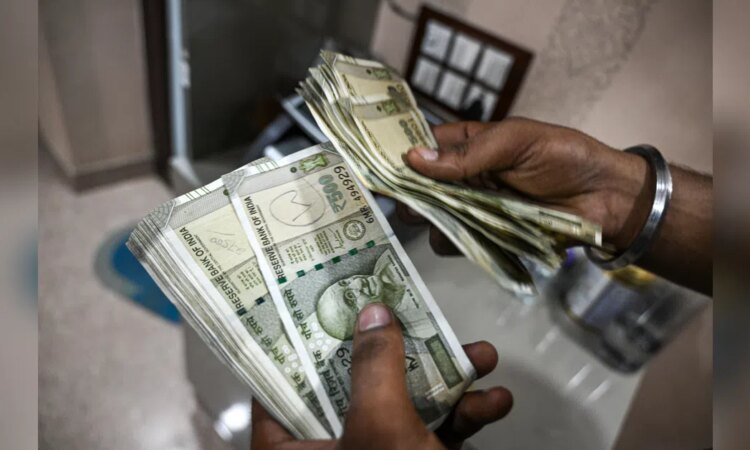
After nearing 97 against the dollar earlier in the week, the rupee staged a sharp recovery in the past two sessions to emerge as the best-performing Asian currency this week due to the central bank’s heavy intervention.
A fall in crude oil prices also supported the currency. The rupee gained 0.29 per cent against the dollar this week and rose 1.2 per cent over the past two days.
The domestic unit settled at 95.69 on Friday, against with the previous close of 96.20, a gain of 0.53 per cent. However, the rupee has still weakened 0.81 per cent so far in May.
“With its aggressive intervention, the Reserve Bank of India (RBI) has created a USD glut in the banking system,” said Abhishek Goenka, founder and chief executive officer of IFA Global.
According to dealers, the RBI is estimated to have sold around $2 billion-$3 billion each on Thursday and Friday through large state-run banks, helping the local currency strengthen beyond the 96-per-dollar level.
“The RBI has been intervening aggressively in both the onshore and offshore markets yesterday (Thursday) and today (Friday). It has intervened with a lot of intent and managed to crush short-term speculators with this move,” Goenka said.
Apart from intervention, lower crude oil prices also supported the rupee after concerns over escalating geopolitical tensions eased, reducing pressure from imported inflation and oil-related dollar demand.
Brent crude prices fell to around $104 per barrel on Thursday and remained near those levels on Friday, after touching a high of $112 per barrel earlier in the week. Sentiment improved after reports suggested that the US and Iran had reached a final draft of a peace agreement.
The reopening of the Strait of Hormuz would be particularly beneficial for India, as trade flows with West Asia could normalise. However, markets are awaiting the final agreement, with the US and Iran still divided over uranium enrichment and the proposed Hormuz toll mechanism. Even so, hopes of diplomatic progress in West Asia improved overall risk sentiment.
“The Indian rupee maintained its upward momentum for the second straight day, effectively reversing the losses sustained at the start of the week. This turnaround is largely attributed to the RBI’s active market intervention following the announcement of its rupee buy-sell swap, alongside a reprieve in imported commodity prices as geopolitical risks eased,” said Dilip Parmar, research analyst at HDFC Securities.
“Technically, the spot rupee faces resistance at 96.20 and support at 95.40,” he added.
Despite the recovery over the last two sessions, the rupee remains under pressure over the longer term. The currency has depreciated 10.12 per cent over the past year and 6.08 per cent in the current calendar year so far.
Meanwhile, India’s foreign exchange reserves fell to a near six-week low after declining by $8 billion in the week ended May 15 to $688.9 billion, as the central bank stepped up intervention in the currency market. The rupee had depreciated 1.55 per cent during that week.
India was the biggest seller of dollars, both in the spot and forward markets, since the conflict began, followed by China and the Philippines, according to a Barclays report. Singapore was the largest dollar buyer, followed by Malaysia. India’s total forex reserves have declined by $39 billion since touching a record high of $728 billion in the week ended February 27.