
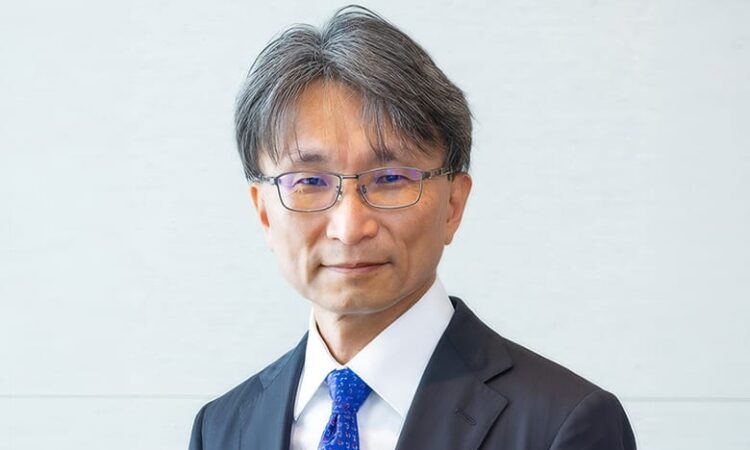

DBJ president Seiji Jige aims to transform the policy lender (Image: DBJ)
Development Bank of Japan, the policy lender of Asia’s second-largest economy, has made its first real estate investment in India, backing an affordable and mid-income housing fund as part of a strategic push to diversify its overseas real estate portfolio beyond its current focus on the US market, HDFC Capital said on Thursday.
DBJ said in a statement that it made the commitment through a fund managed by HDFC Capital Advisors, the real estate private equity arm of HDFC Bank, one of India’s largest lenders. The bank did not disclose the size of its commitment.
“As a government-owned institution, DBJ’s first investment in real estate in India is significant for us and reinforces long-term investor confidence in the country,” said Deepak Parekh, non-executive chairman of HDFC Capital.
The fund, known as the H-DREAM Fund, targets $500 million in commitments with a greenshoe option of a further $500 million, and has already secured more than $350 million from investors including a $150 million anchor commitment from the International Finance Corp. HDFC Capital manages a real estate platform of more than $4.5 billion across five funds focused on affordable and mid-income housing.
Policy Backing
Japan’s foreign ministry established a dedicated Japan-India Economic Affairs Division in April this year to promote private Japanese investment in India, as long-term population decline at home pushes institutions to seek growth overseas.
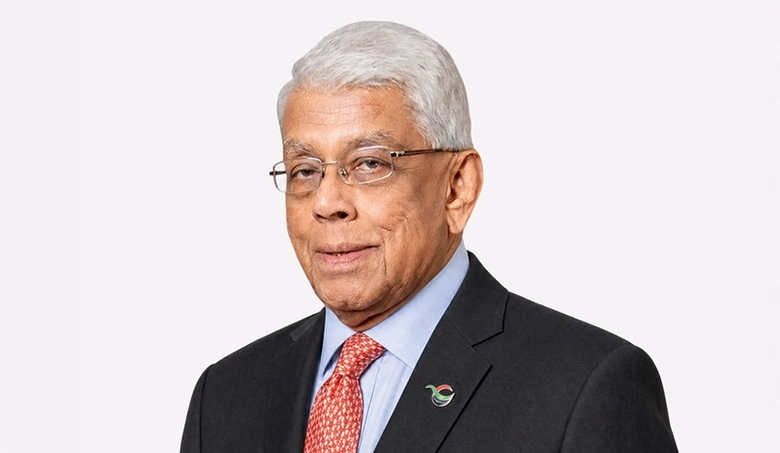
HDFC non-executive chairman Deepak Parek (Image: HDFC)
DBJ president Seiji Jige signalled the strategic ambition behind the bank’s international push in a Japan Times interview published in May, saying that the policy institution intends to transform its corporate culture from traditional lender to investment management firm.
Hayato Tsuji, general manager of DBJ’s real estate finance department, said at the Mingtiandi Tokyo Forum in November 2025 that the bank was looking to reduce the dominant role of the US market in its offshore commitments and add exposure to Europe, Australia and — to some extent — Southeast Asia and India.
DBJ structured the HDFC investment through an offshore feeder fund at Gujarat International Finance Tec-City, known as GIFT City, under the framework of India’s International Financial Services Centres Authority, a mechanism that has become a standard route for international capital entering India’s private real estate funds market.
Investment Wave
“Through this investment, DBJ intends to support the sustainable development of the Indian real estate market, which is facing a housing shortage, while securing investment opportunities in the high-growth Indian market and advancing the geographic diversification of its overseas real estate portfolio,” the bank said in its statement.
DBJ’s commitment is the latest in a growing wave of Japanese institutional capital entering Indian real estate.
Rava Partner’s Logicap logistics division has won repeated commitments from Japanese investors to its India strategies, with Tokyo-listed Mitsubishi Estate backing the platform’s investments in Chennai and the National Capital Region as recently as a year ago.
Fellow Japanese developer Hulic backed a Logicap strategy in 2024, making its first ever investment in Indian industrial real estate through a separate joint venture covering assets near Pune and Chennai. Mingtiandi reported both deals.
In the office sector, Daibiru Corporation, the real estate subsidiary of Japanese shipping giant Mitsui OSK. Lines, took a 25 percent effective stake in CapitaLand Investment’s CapitaLand India Growth Fund 2 in November 2024, with the vehicle backing business parks projects across India’s major gateway cities, according to CapitaLand.
Japan’s third-largest developer, Sumitomo Realty and Development, in December said it plans to make Mumbai its second growth engine after Tokyo, committing $6.5 billion to the India market, according to Reuters.
Home Ownership Dream
The H-DREAM Fund — shorthand for HDFC Capital Development of Real Estate Affordable and Mid-Income Fund — focuses on early-stage financing for green housing development projects in India’s major cities. HDFC Capital requires every project in the fund’s portfolio to meet the EDGE green building certification standard developed by the IFC.
HDFC Capital estimates that 275 million people in India, or 22 percent of the population, lack adequate and affordable housing, with a shortfall of about 18 million dwellings in major cities. The IFC estimates the potential investment opportunity in India’s green building market may reach $1.4 trillion by 2030.
Demographic change is accelerating that demand, HDFC Capital chief executive Vipul Roongta told Bloomberg Television on 28 May. India has “a billion people who are below the age of 35, who are aspirational, who are English-speaking,” he said, adding that the structural shift coincides with heavy state investment in airports, roads and railways.
“For the first time probably in history, we have a very sound physical and digital tailwind,” Roongta said, pointing to India tripling its number of airports in a decade. “We have not seen that kind of infrastructure push in this country ever in the last 65 years.”
Private capital will be essential to meeting that need, Roongta said, but the government’s role is to focus its spending on infrastructure and leave housing supply to the private sector. “We are very confident that what the government is doing is having its head in the right place,” he added.


