Three months of fighting in the Middle East have raised energy prices in Indonesia and pushed the rupiah to historic low levels against the dollar, sparking protests in the capital.
But on the country’s remote Batam Island, locals have welcomed the plunge in value of the currency.
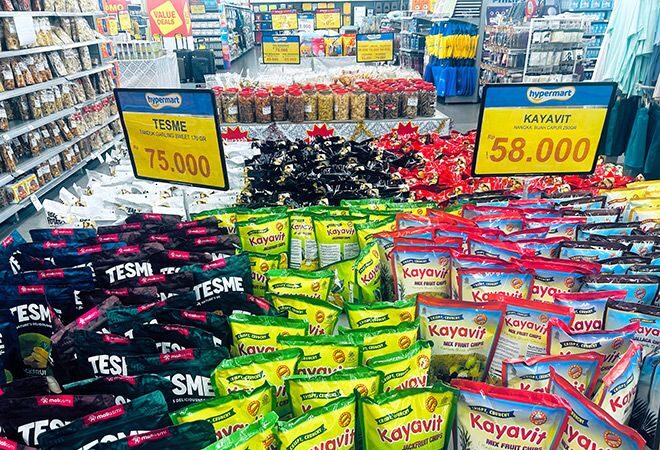
The rupiah has also weakened against the Singapore dollar, and floods of tourists from the city-state are buying up products at supermarkets and filling accommodations on Batam Island.
One worker on the island said many hotels are fully booked on weekends, while a taxi driver said reservations from tourists were on the rise.
“While it may be bad for the nation, we are happy,” the driver said about the rupiah.
The rupiah has fallen about 7 percent in value since the United States and Israel attacked Iran in late February, leading to surging energy prices.
In early April, the rupiah dropped to 17,000 to the U.S. dollar for the first time.
And on June 4, it was trading at 18,000 to the greenback, considered a psychological line among investors.
The Indonesian currency has also declined against the Singapore dollar, trading at about 14,000 rupiah in early June after starting the year at around 11,800.
An immigration official on Batam Island said visitor numbers from Singapore started to surge after the U.S.-Israeli missile strikes against Iran.
Singaporeans only need to take a short ferry trip to Batam Island, about 20 kilometers away.
On June 10, a Singapore man who took the one-hour ferry trip in the morning for what he called a “short shopping trip” said he has never seen such low prices.
Another man from Singapore said he comes to the island up to three times a month.
A worker at a Batam supermarket said Singapore visitors were buying instant noodles and candy at bulk volume.
With its beaches and esthetic salons, Batam Island has long been a popular tourist destination. In 2025, it welcomed about 1.61 million visitors, with about half coming from Singapore.
According to Indonesian government statistics, the number of foreign tourists to the country jumped 8.6 percent year on year in the first quarter of 2026, while Singapore tourist figures soared by 10.4 percent over the same period.
Singapore media reported many of the country’s outbound tourists have headed to nearby Batam Island.
TURMOIL AROUND NATION
Repeated interest rate hikes by the Indonesian central bank have not stopped the rupiah’s slide.
The interest rate was raised by 0.5 percentage point on May 20 and 0.25 percentage point on June 9. Local media said the combined hike of 0.75 percentage point over a 20-day period was highly unusual.
In addition to the Middle East crisis, the lack of transparency in the huge government expenditure plans of Indonesian President Prabowo Subianto has contributed to weakening the rupiah.
In May, Finance Minister Purbaya Yudhi Sadewa announced a cut of 67 trillion rupiah (about 600 billion yen) from the 335 trillion rupiah (about 3 trillion yen) set aside in the budget to make school lunches free, a pet project of Prabowo.
The budget amount had ballooned fivefold from original plans.
Although the government announced a comprehensive reform of the spending program within a month, local media said uncertainty about the future of domestic politics had cooled investor sentiment, leading to the selling of rupiah and falling stock prices.
Seeking to obtain foreign currency and increase tax revenues, the government in June began a new system for unified management of exports of natural resources, such as palm oil and coal, now handled by state enterprises.
But resistance has arisen domestically and abroad to the new unified management system.
On June 12, students organized demonstrations in Jakarta to criticize the surge in gasoline prices and the government’s sloppy fiscal policy.
Local media said about 1,500 protesters took part, with some getting into scuffles with police.
“Indonesia is heading toward bankruptcy,” a female college student said at one of the protests in the capital on June 12.
ASIAN CURRENCIES DROP
Currencies in other Asian nations that import much of their energy have also weakened.
Countries that depend on Middle East petroleum have had to make major dollar expenditures to pay for those imports, while foreign investors have pulled out over concerns about worsening external account balances.
The Indian rupee fell to a record low 96.96 to the dollar on May 20. It stood at 91 rupees before the Middle East conflict began.
While the Reserve Bank of India is believed to have intervened through national banks by selling dollars, it began support measures in June to encourage inflows of foreign currency by tax exempting foreigners who invest in government bonds.
But due to higher fuel prices, stagnant consumption and a cooling of investor sentiment, India at one time simultaneously experienced drops in stock prices, currency value and government bond prices.
According to weekly indicators released by the Sri Lankan central bank, the rupee had fallen by 4.5 percent in value against the dollar on May 15.
By the following week, the decline had expanded to 7.2 percent, the largest drop so far this year.
The central bank raised interest rates by a large figure to restrain increases in import prices and a resurgence of inflation to avoid a repeat of the 2022 economic crisis that led to the collapse of the government.
The Philippines has also felt the effects of higher petroleum prices and a stronger dollar.
On May 18, the peso was trading at 61.75 to the dollar, the third straight close with a record low value.
In addition to raising the interest rate, the Philippine central bank has strengthened measures to restrain excessive market fluctuations.
The Thai baht has also fallen by 4 percent against the dollar after the Middle East crisis broke out.
(This article was written by Kota Kawano in Batam Island and Akiko Suzuki in New Delhi. Staff reporter Rizki Akbar Hasan contributed to this article.)