- As overseas businesses expand rapidly, fluctuations in the yuan exchange rate are significantly impacting the profits of Chinese automakers.
- Foreign exchange risk management is becoming a skill that Chinese automakers must master.
The first-quarter earnings reports released by major Chinese automakers highlight a common new challenge: as overseas businesses expand rapidly, fluctuations in the yuan exchange rate are significantly impacting these companies’ book profits.
Auto giants such as Geely Auto and BYD both suffered severe foreign exchange losses in the first quarter, reflecting that while globalization strategies bring sales growth, they also introduce new financial risks.
Geely’s first-quarter profit attributable to shareholders was 4.17 billion yuan ($610 million), down 27% year-on-year. This was mainly due to a net foreign exchange loss of nearly 500 million yuan during the period, compared with a net gain of over 3 billion yuan in the same period last year.
Excluding non-core items such as foreign exchange gains and losses, Geely’s core profit actually grew by 31%. This indicates that after eliminating currency interference, the operational performance of its core business maintained strong momentum.
BYD was similarly hit by currency fluctuations. The company’s financial expenses in the first quarter surged 210% to 2.1 billion yuan, driven primarily by foreign exchange losses.
BYD’s first-quarter net profit plunged 55% to 4.09 billion yuan. In addition to currency factors, the traditional off-season for sales at the beginning of the year and the phase-out of supportive policies also dealt a blow to the company.
Financial reports from major automakers including Changan Automobile, GAC Group, and GWM showed a similar trend. These companies all achieved year-on-year overseas sales growth of more than 30%, but their foreign exchange gains and losses all turned negative.
Changan reported first-quarter financial expenses of 314 million yuan, an increase of 129.26% year-on-year, mainly due to the impact of reduced foreign exchange gains.
Changan’s net profit attributable to shareholders for the quarter was 351 million yuan, down 74.09% year-on-year.
GAC’s first-quarter net profit excluding non-recurring items fell 55% year-on-year, primarily because exchange rate changes led to foreign exchange losses in the period, compared with foreign exchange gains in the same period last year.
GWM’s first-quarter net profit attributable to shareholders was 945 million yuan, a decrease of 46.01% year-on-year, mainly because exchange rate fluctuations brought foreign exchange gains in the same period last year.
In the first quarter of this year, the onshore yuan appreciated 1.2% against the US dollar, causing book losses for automakers when their foreign currency assets were revalued at the end of the period.
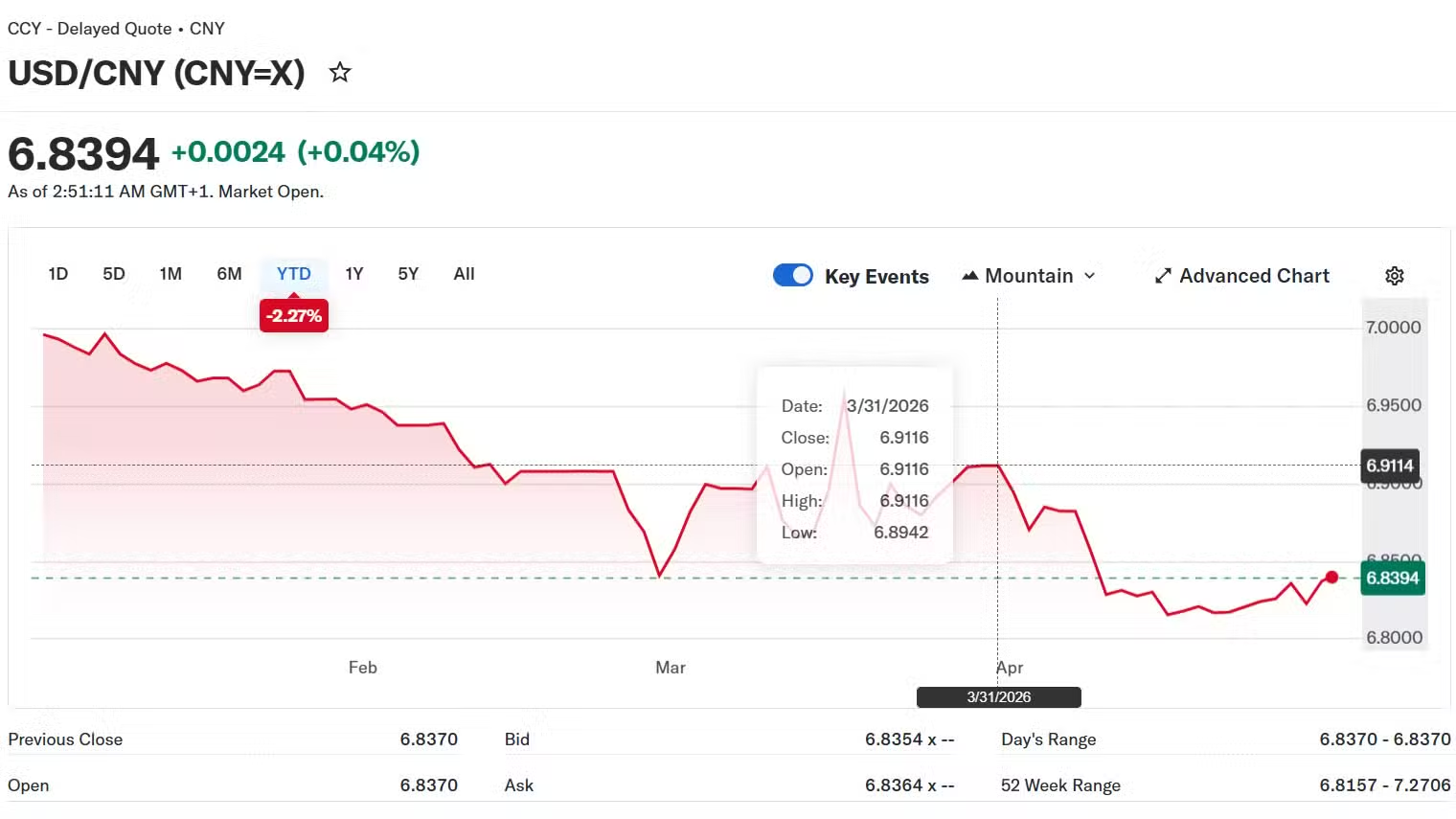
Facing an increasingly complex international environment, foreign exchange risk management is becoming a skill that Chinese automakers must master.
In the short term, automakers should increase their foreign exchange hedging ratio to 50% to 60% and use futures and options tools to lock in order returns, Yicai reported on Wednesday, citing Cui Dongshu, secretary-general of the China Passenger Car Association.
In the long run, automakers should build exchange rate risk control systems, establish exchange rate early warning mechanisms, and strip out the impact of foreign exchange gains and losses, Cui said.
In fact, leading automakers have already begun taking action to hedge against these financial risks. BYD has repeatedly used foreign exchange tools to manage risks, having doubled its quota for foreign exchange derivatives trading from $5 billion to $10 billion in 2025.
Geely also said that the company is actively managing its foreign exchange risk exposure through financial tools such as hedging.

BYD management expressed confidence in achieving 1.5 million vehicle exports in 2026.
($1 = 6.8383 yuan)