Geopolitical bubble bursts overnight! The US dollar loses its key trend line, triggering a collective counterattack by non-US currencies. Next week, the ‘terror data’ and hearings join forces to pressure the market. Who will be caught swimming naked on th

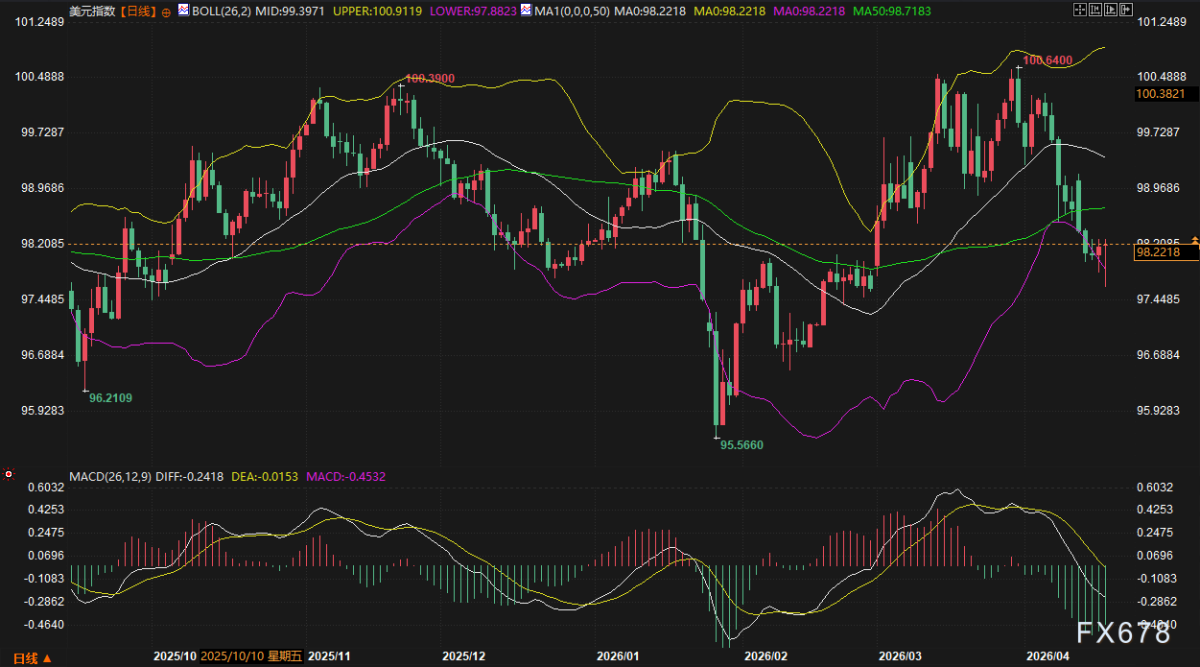
This week, the global foreign exchange market experienced a sharp adjustment triggered by the receding of geopolitical premiums. Following the announcement of the full resumption of navigation through the Strait of Hormuz, market risk aversion rapidly declined, causing significant losses for the US Dollar Index, which closed lower for five consecutive trading sessions, ultimately settling at 98.2218. This movement not only broke the technical uptrend that had been in place since March but also created room for pricing in next week’s key US economic data releases and policy personnel changes.
The market has now entered a transitional period marked by the winding down of geopolitical tensions and a return to focus on macroeconomic data. As overseas mainstream institutions reassess expectations for Federal Reserve interest rate cuts, non-US currencies have generally rebounded. However, the release of US retail sales data next week and the hearing for the nomination of the Federal Reserve Chair will be critical factors determining whether the US dollar can stabilize above the 98 level.

Detailed Review by Currency
1. US Dollar Index
Weekly Performance Recap: The US Dollar Index showed extreme weakness this week, with intraweek volatility reaching 1.58%. Daily chart patterns indicate that the index has completely broken below the uptrend line that had been in place since March. On Friday, it briefly touched a seven-week low of 97.632 before recovering slightly above the 98 level post-session. However, the current exchange rate remains pressured below the MA50 line (98.7183), with bearish momentum continuing to unfold.
 Economic Data and Event Summary: The core driver was the systematic unwinding of geopolitical premiums. With Iran and related parties signaling the resumption of navigation, the sharp decline in crude oil prices led to a drop in US Treasury yields, directly undermining the appeal of the US dollar as a safe-haven currency.
Analyst and Institutional Views: Prominent wire service analysis suggests that the current decline in the US dollar is primarily due to a ‘concentrated liquidation of safe-haven positions.’ Overseas mainstream institutions caution that next Tuesday’s Retail Sales data (commonly referred to as the ‘terror data’) will be crucial. If the data reflects stronger-than-expected domestic demand resilience, the US dollar may find technical support near 97.8 (Bollinger Band lower rail) and stage a rebound.
2. USD/JPY
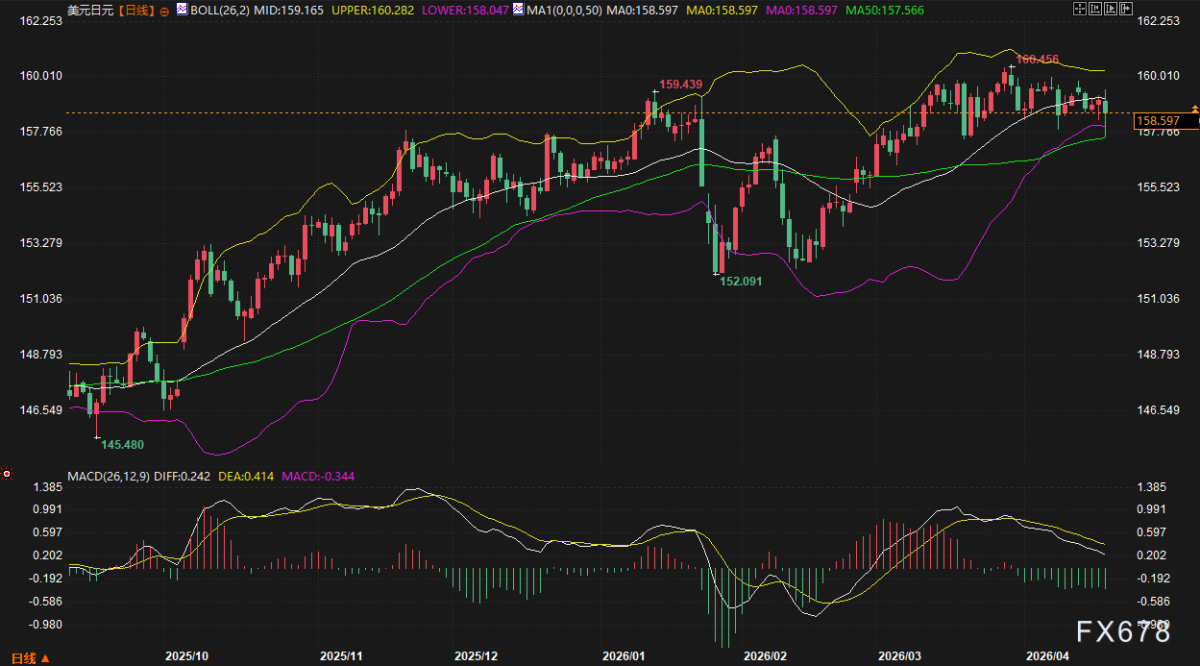
Weekly Performance Recap: USD/JPY fell by 0.42% this week, closing at 158.597. After failing to break through the 160 level, the pair retreated amid broad weakness in the overall US Dollar Index, though it found strong support at the MA50 line (157.566).
Economic Data and Event Summary: Bank of Japan Governor Kazuo Ueda adopted a dovish tone this week, hinting at a low probability of a near-term interest rate hike. However, next Friday’s Japanese CPI data, seen as a key indicator influencing the interest rate path, has limited further depreciation potential for the yen.
Analyst and Institutional Views: Overseas mainstream institutions believe that the Japanese yen’s current trend is in a ‘policy vacuum period.’ The combination of trade data due mid-next week and inflation data on Friday will form a one-two punch. If inflation data strengthens, it will dominate the short-term movement of the yen and test the support level around 157.
3. GBP/USD
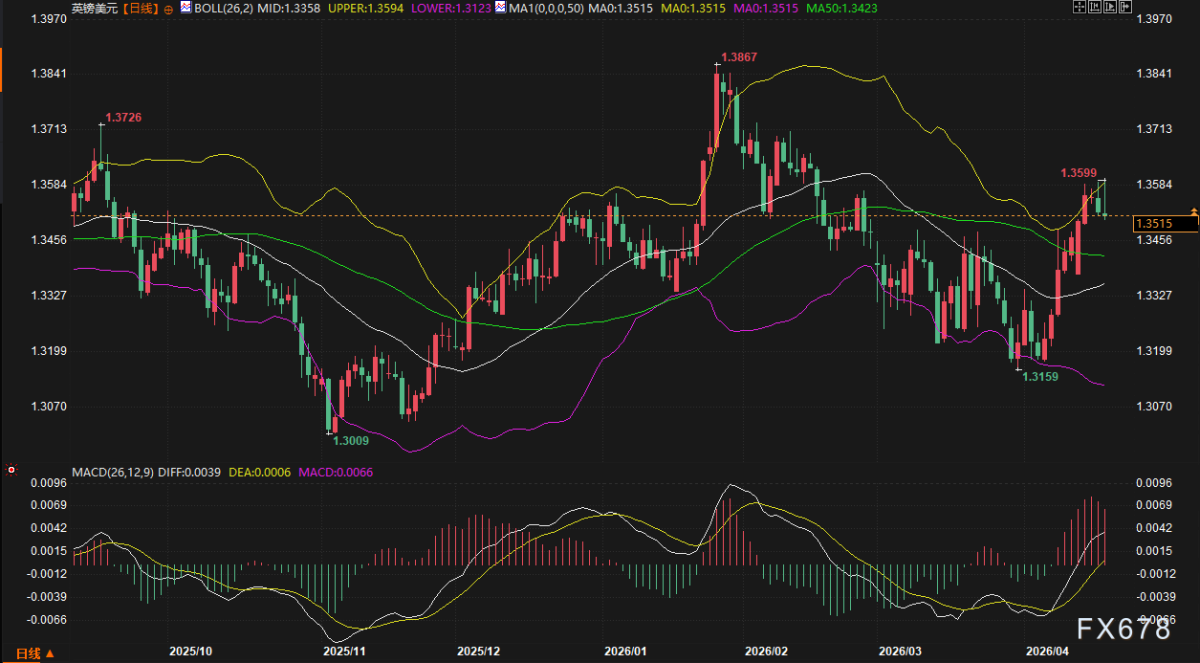
Weekly Review: GBP rose 0.36% this week, closing at 1.3515. During the week, it briefly tested the resistance level at 1.3599, showing characteristics of consolidation after a rebound faced resistance. It has now stabilized above the key support level of 1.345.
Economic Data and Event Summary: Divergent statements by Bank of England officials on inflation have provided a basis for interest rate differential expectations to support GBP. The market is closely watching the upcoming UK CPI data release next Wednesday.
Analyst and Institutional Views: Prominent wire analysis suggests that GBP has recovered most of its losses from late March. The resonance between next week’s UK PMI data and inflation data will determine whether the exchange rate can break through the 1.36 level. Should the data weaken, caution is warranted as the exchange rate may retest the Bollinger middle band (1.3358).
4. EUR/USD
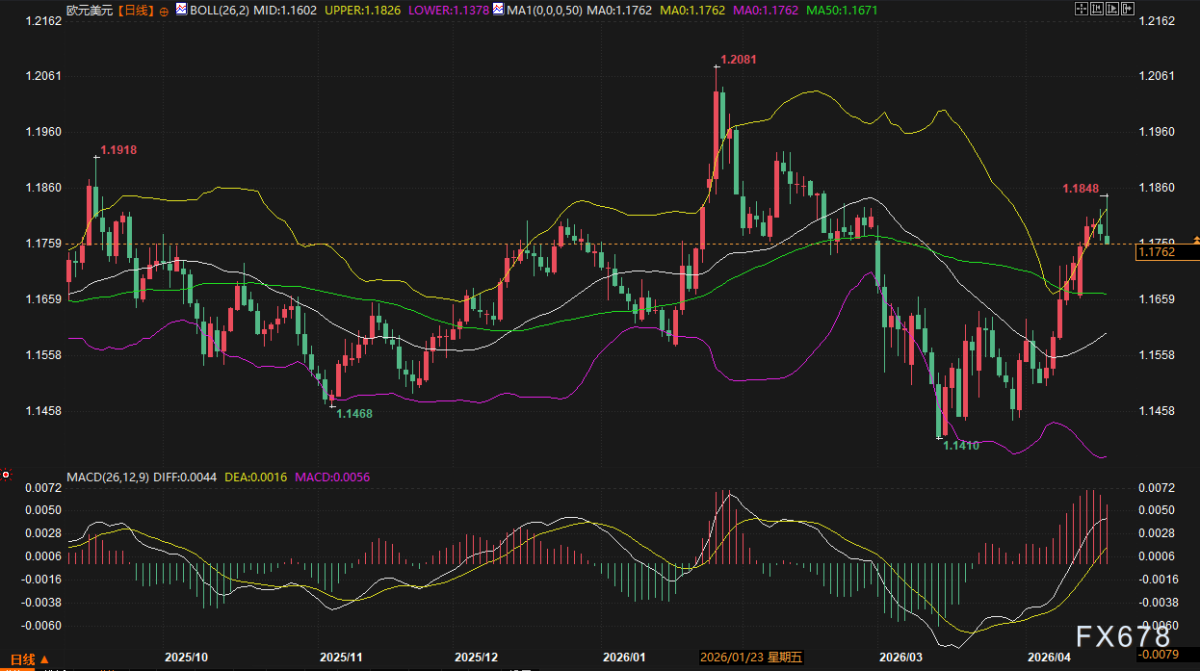
Weekly Review: EUR rebounded 0.28% this week, closing at 1.1762. On the daily chart, EUR broke through the middle band and, driven by positive geopolitical factors, reached an eight-week high of 1.1848. The MACD red momentum column continued to expand, indicating clear bullish intent.
Economic Data and Event Summary: Improved risk appetite supported the EUR trend. Next Thursday, ECB President Lagarde will speak again, and the release of April PMI data across the Eurozone will directly impact the market’s pricing of Europe’s economic recovery resilience.
Analyst and Institutional Views: Mainstream overseas institutional strategists note that the current strength of the EUR is primarily driven by the weakening of the USD. Next week is the Eurozone’s ‘Super Data Day,’ and PMI performance will directly affect the valuation center of European equity markets. If the data disappoints, the EUR may face pullback pressure near the key resistance level of 1.185.
The ‘high dive’ in the forex market this week has fully released the geopolitical premium. Looking ahead to next week, the market will experience the ‘American moment’ comprising retail sales data and the Federal Reserve Chair nomination hearing. Kevin Warsh’s policy stance will directly shape the market’s ultimate forecast regarding the future pace of rate cuts.
Moreover, the potential liquidity shock from the WTI crude oil futures rollover on Wednesday, along with the collective release of PMI data from major global economies on Thursday, signals that the foreign exchange market is entering a sensitive period of heightened volatility. With the US Dollar Index hovering near the critical level of 98, it is advisable to closely monitor the cross-guidance from the ‘terror data’ and the hearing testimony, guarding against position risks triggered by rapid logic shifts.
QA Module
Q1: Why is next Tuesday’s US retail sales data considered a ‘make-or-break’ moment for the US Dollar Index?
Retail sales data directly reflect the performance of broad-based consumption in the US, which contributes over 70% to its GDP. The recent decline in the dollar was primarily due to the dissipation of risk aversion sentiment, while fundamentals have not been disproven. If next Tuesday’s data shows strength, it will demonstrate that the resilience of the US economic recovery remains ahead of other developed economies, attracting interest rate arbitrage funds back to the dollar and stabilizing the index at the technically critical level of 97.8. Conversely, if the data is weak, the dollar will lose its last fundamental support, potentially falling towards the key level of 97.0.
Q2: How will Kevin Warsh’s nomination hearing for Federal Reserve Chair impact the forex market logically?
The policy stance of the Federal Reserve Chair directly determines medium- to long-term interest rate expectations. The market will look for signals during the hearing regarding ‘inflation tolerance’ and the ‘balance sheet reduction process.’ If his testimony leans hawkish, suggesting tighter liquidity or a slower pace of rate cuts, it will directly counteract current rate-cut expectations, pushing the dollar sharply higher. If he advocates accelerating policy shifts to align with the current state of domestic demand, it would further solidify the downward trend of the dollar.
Q3: What are the potential risks for forex traders from the WTI crude oil futures rollover on Wednesday?
The rollover of crude oil contracts often comes with sharp fluctuations in premiums/discounts and an instantaneous tightening of liquidity. Given the high correlation between commodity currencies like the Canadian dollar and the Australian dollar with oil prices, any abnormal price gaps during the rollover period could trigger chain liquidations in cross-currency pairs. Additionally, the simultaneous release of API and EIA inventory data on Wednesday, if inventories fall short of expectations, could easily trigger a secondary collapse in oil prices during the rollover window, thereby dragging down risk-sensitive currencies.
Q4: As global PMI data is set to be released collectively next Thursday, which region’s data will contribute most to currency volatility?
Focus should be placed on Germany and the Eurozone’s PMI data. As a leading indicator of economic health, if the Eurozone PMI stays above the 50-mark, it will validate the European recovery narrative, supporting the euro to challenge the resistance level at 1.185. Meanwhile, the connection between the UK PMI and Wednesday’s CPI data will also determine the trajectory of the British pound. For the US, PMI needs to be analyzed alongside the initial jobless claims released on the same day; conflicting signals such as ‘weak employment but strong economic activity’ could send the US Dollar Index into intense high-frequency fluctuations.
Q5: How to assess the pressure of Japan’s CPI data on the 158 defense line for USD/JPY?
Friday’s Japanese CPI is the core determinant of the probability of the Bank of Japan raising interest rates. Currently, USD/JPY exhibits extremely strong technical resilience around 158. If the CPI data is stronger than expected, it will force Kazuo Ueda to revise his previously cautious tone, triggering large-scale short covering in the yen, breaking below 158 and targeting 157.5. If the data is lackluster, under expectations of a dollar rebound, the yen may return to a volatile pattern around the 160 level.