Here are 13 African currencies that beat the dollar in August despite renewed Iran tensions
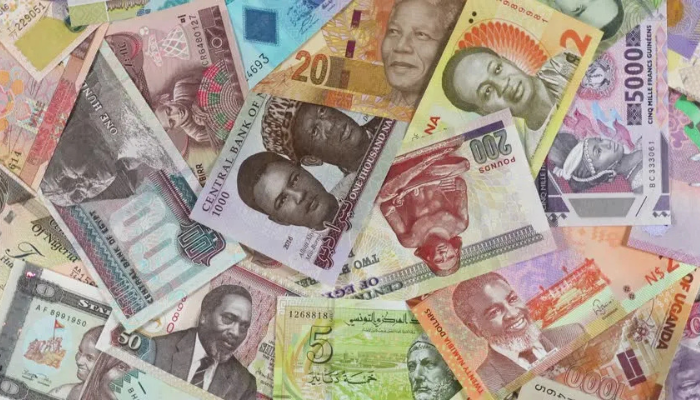
African currencies performed stronger in August, with 13 of the 17 currencies tracked gaining against the United States dollar, compared with only seven in July.
The improvement came despite renewed tensions in the Middle East. The United States and Iran had maintained a period of relative calm after an earlier ceasefire. Still, fresh strikes at the end of August revived concerns over oil supplies and pushed Brent crude above $90 a barrel on August 31.
According to data compiled by real-time trading platform African Markets, 13 of the 17 major African currencies tracked appreciated against the dollar between the end of July and the end of August, while four depreciated. The performance marked a notable improvement from July, when only seven currencies recorded gains.
Read also: four-african-currencies-that-outperformed-in-the-first-half-of-2026/
The Ghanaian cedi was the strongest performer in August, appreciating by 3.72 percent against the dollar.
The currency strengthened from 11.69 cedis per dollar at the end of July to 11.27 by the end of August.
The monthly gain marks a sharp turnaround for a currency that had been Africa’s weakest performer for much of the year.
After gaining more than 40 percent against the US dollar in 2025 and emerging as Africa’s best-performing currency, the cedi came under sustained pressure in 2026. By July 28, it had lost 11.6 percent against the dollar year to date.
Botswana pula
The Botswana pula appreciated by 2.77 percent, moving from 14.06 pula per dollar at the end of July to 13.68 at the end of August.
The pula’s performance reflects Botswana’s relatively strong external position and its established system of managing the currency against a basket of currencies. The country’s foreign exchange position is closely linked to its export earnings, particularly diamonds.
Namibian dollar
The Namibian dollar gained 2.54 percent, strengthening from 16.53 per dollar to 16.12.
Its performance was closely linked to the South African rand because the Namibian dollar is pegged one to one to the rand. As a result, movements in the rand are quickly reflected in Namibia’s currency.
The rand received some support from domestic economic indicators during the month, although gains were limited by a stronger dollar and uncertainty over US monetary policy.
Read also:here-are-the-seven-african-currencies-that-outperformed-the-dollar-in-july/
South African rand
The rand also appreciated by 2.54 percent, moving from 16.54 per dollar at the end of July to 16.13 at the end of August.
The currency faced competing forces during the month. Lower precious metal prices and a firmer dollar weighed on it, but cooler domestic producer inflation provided some support for investor confidence.
By the end of the month, however, renewed US-Iran tensions and rising oil prices were again putting pressure on the rand.
Nigerian naira
The naira appreciated by 2.03 percent, strengthening from N1,363.95 per dollar at the end of July to N1,336.71 at the end of August.
The improvement came as Nigeria’s foreign exchange position strengthened. Moody’s revised Nigeria’s sovereign outlook to positive in August, citing higher foreign exchange reserves, stronger than expected economic growth and greater resilience to external shocks. The ratings agency also pointed to higher oil revenues and a current account surplus as supporting factors.
Tunisian dinar
The Tunisian dinar appreciated by 1.03 percent, moving from 2.94 per dollar to 2.91.
Tourism and transfers from Tunisians living abroad continued to provide important foreign exchange inflows. By July, Tunisia had welcomed about 5.8 million visitors, generating 4.4 billion dinars in tourism receipts.
Egyptian pound
Egypt’s pound gained 0.82 percent, strengthening from 51.12 pounds per dollar to 50.70.
The currency continued to benefit from the easing of Egypt’s foreign exchange shortages and stronger inflows from tourism, remittances and foreign investment. The IMF has previously linked Egypt’s improved external position to these inflows, alongside tighter monetary and fiscal policies and a more flexible exchange rate.
CFA franc
The CFA franc appreciated by 0.79 percent, moving from 569.52 CFA francs per dollar to 565.05.
The currency’s performance is closely connected to the euro because the CFA franc.
Moroccan dirham
Morocco’s dirham appreciated by 0.75 percent, strengthening from 9.36 per dollar to 9.29.
Tourism remained an important source of foreign exchange. Morocco recorded strong tourist arrivals during the first quarter, while tourism revenues reached 21.4 billion dirhams by the end of February, up 22.2 percent from a year earlier.
The country also maintained a substantial foreign exchange reserve position, with official reserve assets reaching nearly 498 billion dirhams in July.
Malawi kwacha
The Malawian kwacha recorded a modest 0.10 percent appreciation, moving from 1,746.80 per dollar to 1,744.89.
The gain was marginal and points more to relative stability than a major currency rally. Malawi continues to face structural foreign exchange constraints, making small movements in the currency significant in a market where demand for dollars remains strong.
Mauritian rupee
The Mauritian rupee gained 0.06 percent, moving from 47.03 per dollar to 47.00.
The movement was small, but Mauritius continues to benefit from foreign exchange earnings from tourism.
Read also: fewer-african-currencies-gain-in-may-as-iran-war-fuels-volatility/
Tanzanian shilling
The Tanzanian shilling appreciated marginally by 0.06 percent, moving from 2,643.21 per dollar to 2,641.53.
The near-flat movement suggests that the currency largely held its ground rather than experiencing a significant rally.
Zimbabwean ZiG
Zimbabwe’s ZiG recorded the smallest gain among the appreciating currencies, rising by 0.03 percent from 26.68 per dollar to 26.67.
The near-unchanged movement reflects the tight range in which the currency traded during the month. Zimbabwe has continued efforts to strengthen regulation of its foreign exchange and financial markets, although confidence in the country’s currency remains a major consideration for businesses and households.
Four currencies weakened
Four of the 17 currencies tracked lost ground against the dollar in August.
Zambia’s kwacha recorded the largest decline, falling by 0.94 percent from 18.85 to 19.03 per dollar. The currency came under pressure around the country’s August 13 election, although strong copper prices provided some support.
Zambia’s copper sector accounts for about 70 percent of export earnings, making copper prices and production critical to the kwacha’s outlook. Uganda’s shilling depreciated by 0.50 percent, while Rwanda’s franc fell by 0.30 percent. Kenya’s shilling was broadly stable, recording only a 0.03 percent decline from 129.37 to 129.42 per dollar.