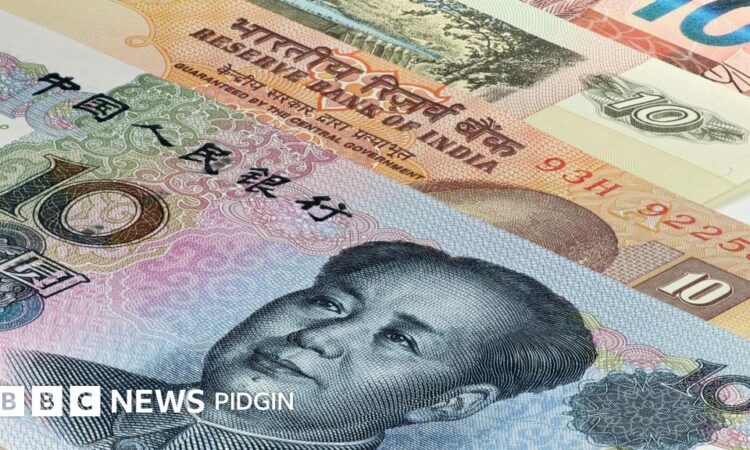

Wia dis foto come from, Getty Images
Wen di US-Israel war with Iran bin first start for di end of February, no be just di Middle East dey feel am.
As di kasala don scata commercial shipping and di flow of goods around di world, oil prices don rise, wey push up inflation and dey shake global markets.
Normally, for times of uncertainty, some investors don comot dia money from investments wey fit dey riskier for emerging markets, and chook dia money put di US dollar wey dey traditionally seen as safe.
Dis don dey affect many oda currencies, some don nose dive in value, although odas don dey more volatile and few don dey strengthened.
André Perfeito, wey be Brazilian economist and oga for consultancy APCE tok say, while oil prices “dey affect evrione… currency fluctuations fit increase or cushion di effect”.
So wen dis mata dey mixed wit oda factors wey dey also affect di economy, wetin dis fluctuation of currency mean for individual kontris and citizens?
Di hardest-hit

Wia dis foto come from, Bloomberg via Getty Images
Kontris wey dey import plenti of dia energy, especially oil na among dose wey dia currencies don dey feel am.
Dem include India, Indonesia, di Philippines, Thailand and Egypt, wey don dey feel new strain from di higher fuel costs and constant shortage of foreign-exchange.
As investors money don enta di US dollars, demand for dis currencies don fall and weak dia value, wey mean say to pay gbese in dollars don rise.
Oil and oda products – wey don dey affected by di blockage of shipping for di Strait of Hormuz – dem dey normally sell dat one in dollars too.
As a currency fall in value, imports go cost wey go affect evritin from energy to plastics to even fertiliser sef. Dat one go kon affect di price of food and evriday items for shop.
For India, di rupee don fall by about 5% against di US dollar since di war start and don dey break records wit how low e don go as oil prices dey climb.
Di Indian currency don alreadi start to weak bifor di kasala burst, but na wetin dis war don cause wey don make mata worse.
Some central banks don ansa di mata wit raising interest rates and selling off some of di US dollars wey dem get to raise di value of dia currencies.
Di Bank of Indonesia don do two of dem, wey mean say dem dey sell dollars dey buy dia own currency, di rupiah, to boost demand for am.
Wen interest rates rise, e men say pipo go make more money for dia savings, but e also mean say pipo gatz pay more for gbese like mortgages and oda loans.
Volatile and trending upwards

Wia dis foto come from, Bloomberg via Getty Images
Anoda group of currencies don dey more volatile, as dem just dey go up and come down.
Kontris like South Africa, Colombia, Chile and Mexico na dem dey inside dis groups.
Dis currencies dey normally react to global market mood. Dis mean say dem dey fall wen investors run go buy safe investments like dollar, but dem dey quick to recova wen commodity prices rise or di ginger to take risk come back.
Some energy exporters like Brazil and Malaysia don win small sake of rise in oil prices wey don ginger dia export money and support investor interest.
Banks like Goldman Sachs and Bank of America bin torchlight say strong demand for Brazilian govment bonds and company shares for reports to clients for April as di first bank tok say Braziil na im top emerging market pick.
But Martin Castellano, wey be di oga of di Latin America research for di Institute of International Finance tok say di higher energy prices fit increase inflation for Brazil wey fit delay interest rate cuts and affect capital flows.
Brazil dey also import refined products like gasoline and diesel wey fit push up fuel costs for house.

Wia dis foto come from, Getty Images
To add to am na di political uncertainty bifor di presidential election for October “wey go increase di risk premium on di exchange rate”, dis na according to wetin one economist Luiza Pinese of XP, wey be Brazilian investment management company tok for report.
Anoda separate group of currencies don stay more resilient for different reasons.
China currency don stable relatively partly bicos of capital controls and policy intervention wey don limit sharp fluctuations. Di restrictions include for restrictions on di money wey dey go in and comot di kontri and direct interventions by di central bank wey closely manage di yuan exchange rate.
Di Russian rouble, wey be one of di top-performing currencies against di dollar since di outbreak of di Iran war, don also dey supported by high energy revenues and strict capital controls, including measures wey require exporters to convert foreign earnings into roubles and limit di flow of money out of di kontri.
What about developed economies?

Wia dis foto come from, Bloomberg via Getty Images
Traditional safe‑haven currencies bin strengthen at di start of di crisis as investors look for safety. Di US dollar and di Swiss franc both go up bifor dem go down to levels similar to di level wey dem dey bifor di war. Oil‑linked currencies, such as Norway krone, don get significant boost from rising crude prices.
But di Japanese yen no do like di normal safe haven currency and even bin weak. Dis bin dey mostly bicos Japan dey rely well-well on imported energy.
Canadian and Australian dollars don also benefit from di stronger prices for di goods wey dia kontris dey export like crude oil, gas, metals, iron ore and coal. But pipo still dey worry say global growth and trade tensions fit reduce dis gains.
Di euro and di British pounds don do dia on up and downs sef. Dis na sake of worry ova higher energy costs, stubborn inflation and slowing growth all ova Europe.
Wetin fit happun next?
Economists tok say while di initial air strikes for Iran bin drive investors enta safer assets and make di dollar to dey stronger, di US currency don weak wey fit help emerging markets.
Economists for UK global investment firm AllianceBernstein tok for recent report say “weaker dollar normally mean easier monetary conditions, wey mean say room go dey for interest rate cuts for developing kontris, and lower risk aversion – all favourable for emerging markets”.
Dem add say di dollar role remain central, as much of emerging economies debt dey borrowed in US dollars and key commodities dey also priced in dollars, meaning a weaker dollar fit improve dia outlook.
But di IMF warn for April say di kasala wey di Iran war cause dey push di global economy to im “adverse” scenario wey go dey marked by combination of weak growth and higher inflation.
For dis scenario – wia oil price stay high, inflation dey less stable and financial conditions dey tight dey go – global growth fit fall to 2.5% wit inflation wey fit rise to 5.4% wen dem compare di fund forecast of 3.1% wit 4.4% inflation.
Di IMF also outline a more severe scenario, wia global growth drop to 2.0% and inflation exceed 6%. Dem dey expected to update dia forecasts again for July.