Every payment system in history has run on the same fuel: trust. Gold coins minted in imperial China and paper rupiah printed in Jakarta share a single secret, which is that neither is valuable. Money works only because whole societies agree to believe in it at the same time, and wherever that shared belief reaches, trade follows.
Centuries before anyone designed a modern financial system, merchants from China and the Indonesian archipelago were already proving the point. At the harbors of Malacca, Demak, and Halmahera, they traded silk, porcelain, ceramics, and spices without a shared language or a shared currency.
What changed hands was more than cargo. Each transaction was an act of mutual confidence between strangers who had decided to rely on one another.
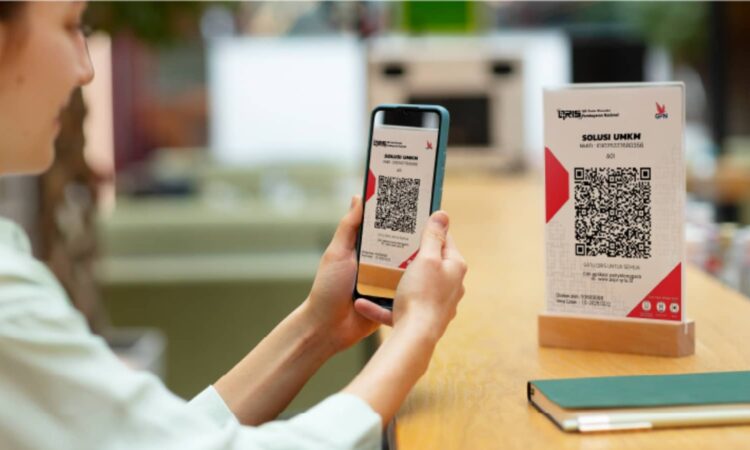
In our era, that confidence has taken a new physical form: a square of black-and-white code on a smartphone screen. Indonesia’s vehicle for it is the Quick Response Code Indonesian Standard, better known as QRIS.
When Bank Indonesia introduced the standard in 2019, the goal was modest in wording but sweeping in consequence, namely to merge a digital payment landscape that had splintered into walled-off ecosystems. The result was a single code that any bank, any e-wallet, and any merchant could read, from a street-food cart in a small Javanese town to a department store in metropolitan Jakarta.
Seven years on, the standard has outgrown its original job description. QRIS now operates as a tool of economic statecraft. On April 30, 2026, Bank Indonesia formally activated cross-border QRIS with China, adding the region’s largest economy to a network that already includes Thailand (2022), Malaysia (2023), Singapore (2023), Japan (2025), and South Korea (2026). India and Saudi Arabia are next on the expansion agenda.
Read More: Indonesia’s QRIS Now Can Be Used in China: Innovation or Digital Sovereignty?
None of this would be credible without deep roots at home. Between full implementation in 2020 and the first quarter of 2026, 44 million merchants adopted QRIS, the overwhelming majority of them micro, small, and medium enterprises, alongside 61.7 million active users. Over the same period the system processed more than 31 billion transactions worth a cumulative IDR 2,970 trillion, roughly USD 180 billion.
That domestic depth is what allowed Indonesia to present QRIS abroad not as a national curiosity but as a building block of a wider regional payment architecture. The early returns support the ambition. Inbound flows, meaning foreign visitors paying inside Indonesia, now exceed outbound spending by Indonesians overseas on both counts of volume and value.
In the first quarter of 2026, inbound transactions reached 2.79 million, up 222 percent year on year, carrying IDR 713.59 billion in value, against 737,647 outbound transactions worth IDR 249.26 billion.
The significance, however, goes beyond convenience at the checkout counter. When Bank Indonesia Governor Perry Warjiyo stood beside Chinese Ambassador Wang Lutong to inaugurate the Indonesia-China linkage, the ceremony spoke to more than market participants. It addressed a relationship between two civilizations whose habit of trusting each other predates modern finance by centuries.
Those old port-side encounters carried a lesson that still holds: traders never needed identical money to do business. They needed a reason to believe the other side would honor the exchange.
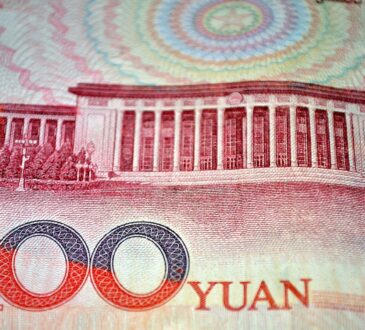
Cross-border QRIS brings that belief down to the most personal scale imaginable, connecting the rupiah and the yuan directly, linking a food stall in Yogyakarta with a visitor from Chengdu. The Indonesian seller is paid in rupiah. The Chinese traveler pays in yuan. The trust between them completes its journey without detouring through anyone else’s currency arrangements.
At a moment when geopolitics is uncertain and global trade networks are fragmenting, the capacity of two economies to deal in each other’s financial language is more than an efficiency gain.
It is diplomacy made tangible. Half a millennium ago, trust between these peoples was sealed with spices and porcelain on the docks of Malacca. Today it is renewed in under a second, with one scan of a QR code: quick, borderless, and increasingly sovereign.
*The views presented in this article are the author’s own and do not necessarily reflect the views of The Diplomatic Insight.*

Muhamad Rifki Maulana
Muhamad Rifki Maulana is an Economist at the Central Bank of Indonesia, where his work focuses on regional economic analysis, inflation dynamics, and green economy policy across Indonesia’s regions. He holds a Master of Public Policy from the University of Michigan, with a distinction in Sustainability. He can be reached at [email protected]