
MSCI Raises New Transparency Concerns About Indonesia as Emerging Markets Verdict Looms – The Diplomat
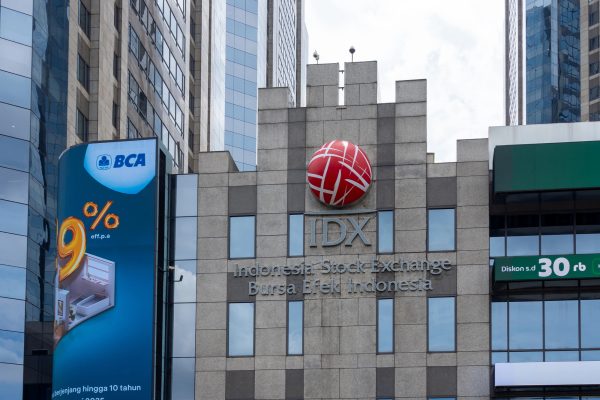
The global index provider MSCI yesterday delivered another negative verdict on the Indonesian economy, citing concerns about market accessibility, in particular, the lack of transparent and reliable data on stock holdings.
In its annual Global Market Accessibility Review, MSCI lowered Indonesia’s information flow criterion to negative, reflecting “structural issues in the opacity in shareholding structures and concerns about coordinated trading.”
The index provider said that these issues “undermine proper price formation” and impact investors’ ability to “assess true free float and to rely on observed market prices for portfolio construction and index replication.”
The decision comes just a week ahead of MSCI announcing its decision on whether to downgrade Indonesia’s market classification to frontier status, a move that could trigger billions of dollars of capital outflows.
MSCI threatened to downgrade Indonesia in January due to a number of transparency concerns in its stock market, including the high concentration of ownership in certain companies and the limited “free float” of tradeable shares. The decision prompted a dive in the benchmark Jakarta stocks index, which fell by around 8 percent, wiping out $80 billion in market value. While it later recovered, Reuters reports that the index has fallen by 29 percent in 2026, and that foreign investors have sold around $3.65 billion worth of Indonesian stocks so far this year.
In response to MSCI’s threat, Indonesia’s government announced a long list of proposed reforms. Among these were a doubling of the minimum free float for listed companies to 15 percent. The top executives of the exchange and regulatory body also stepped down.
In April, MSCI extended its review of Indonesian markets to assess a series of reforms announced by the Indonesian government. The following month, it removed six companies from its Indonesia Index and dropped another 13 companies from its small-cap index list, prompting another downward lurch in the stock market.
The transparency concern aired by MSCI, whose role as the primary benchmark for institutional investors gives it considerable power over emerging economies, has dovetailed with broader concerns about the management of Indonesia’s economy by President Prabowo Subianto.
Since coming into office in October 2024, Prabowo has pursued high-spending populist policies, including a multibillion-dollar free meal program, that have widened the fiscal deficit toward its legally mandated ceiling of 3 percent of GDP. The former general has also increased the state’s involvement in the Indonesian economy in a bid to maximize the country’s return from natural resources and international trade.
These policies, along with the firing of respected Finance Minister Sri Mulyani Indrawati last September, have unsettled investors and undermined Indonesia’s hard-won reputation for fiscal conservatism. A microcosm of this falling investor confidence has been the slide in the value of the rupiah, which has now depreciated by more than 14 percent since Prabowo took office. After hitting record lows against the U.S. dollar this year, the currency is now worth less against the U.S. dollar than during the Asian financial crisis of 1997-1998.
In March, both Moody’s and Fitch announced ratings outlook downgrades for Indonesia, with the latter citing the “increasing policy uncertainty and erosion of Indonesia’s policy mix consistency and credibility” and the “growing centralization of policymaking authority.”
While Indonesian officials remain confident that their promised reforms are enough to stave off the worst, a negative verdict from MSCI next week would further compound the challenges facing Indonesia’s economy. A downgrade to “frontier market” states would force passive, index-tracking funds to sell off billions of dollars in local assets, producing a bloodbath in Indonesian equity markets and likely pushing the rupiah to new lows.


