
This Is the Biggest Reason Investors Lose Money During a Stock Market Crash — and How to Avoid It
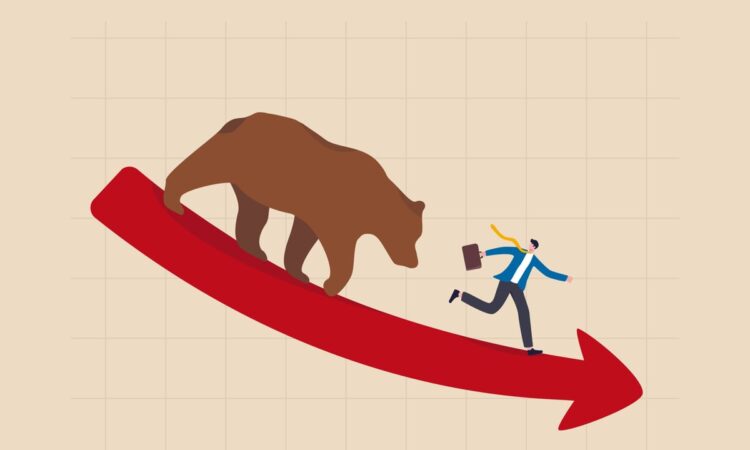
To say that the investors have been on a roller coaster over the last year would be an understatement. The S&P 500 (^GSPC +0.46%) is surging yet again, up over 3% in the past five days alone, as of this writing. This shortly after the index reached its lowest point of the year earlier this month.
But with tensions in the Middle East continuing to rise and no resolution in sight, there’s no telling where the market may be headed as oil prices wreak havoc on supply chains.
No matter what’s on the horizon, though, there’s an almost surefire way to protect your money in the stock market — and it may sound very counterintuitive right now.
Image source: Getty Images.
The biggest mistake investors make amid volatility
Perhaps the easiest way to lose money in the stock market is to sell your investments after prices have already dropped. If you’ve fallen into that trap, you’re not alone. In the moment, selling during periods of volatility often feels safer than watching your account balance plunge.
The reason it’s so dangerous, though, is twofold. For one, you risk locking in losses by selling your investments for less than you paid for them. But also, if stocks quickly recover, you may have to pay a premium just to get back in the market.
For example, say you own a stock currently priced at $100 per share. If that stock dips down to $80 per share and you sell, you’ll have locked in losses of $20. But then if it rebounds to, say, $120 per share and you decide at that point to get back in the market, you’ll end up paying a higher price for the exact same investment you just sold.
By simply holding that investment through the downturn, though, you’d have avoided those losses entirely and increased your portfolio’s value.
What if the stock market crashes?
Of course, the logic behind selling now is that if the market crashes, it’s better to sell while prices are higher. But the market is so unpredictable, especially right now, that there’s no way to know what it will do in the short term.
In the past few years alone, there have been several instances in which even the experts predicted a major downturn that didn’t actually materialize.
- In early 2020, the S&P 500 lost more than one-third of its value in a matter of weeks due to the COVID-19 pandemic, with many investors worried a full-blown recession was coming. Between March and December of that year, however, the S&P 500 surged by nearly 30%.
- Throughout much of 2023, economists warned that we could be headed toward a recession as runaway inflation took a toll on the economy. In June of that year, experts at Deutsche Bank even predicted a “near 100%” chance of a recession beginning in the next 12 months. That recession still hasn’t happened, and in the year following that forecast, the S&P 500 soared by close to 27%.
- In April of last year, uncertainty around tariffs caused the S&P 500 to plunge by more than 10% in less than a week. When President Trump quickly walked back many of those tariffs, though, stock prices surged again — with the S&P 500 rising by nearly 20% in the six months following “Liberation Day.”
All of this to say that no matter how certain a recession or stock market crash may seem, nothing is guaranteed. If the war in Iran continues or tensions escalate further, we could be headed for a prolonged downturn. But if leaders can agree on a resolution, oil prices could return to normal and inflation may cool — reducing the chances of a recession.
What should investors do right now?
While it’s not always easy, staying invested through periods of volatility is one of the best ways to protect your investments. Your portfolio could lose short-term value if prices sink again, but the market has a flawless history of recovering from even the most severe recessions and bear markets.
It’s also more important than ever that you invest in strong stocks with long-term growth potential. Many companies have experienced soaring stock prices in recent years, but those that are more hype than substance may struggle to survive economic rough patches. Robust companies with solid foundations, though, have a better chance of earning positive long-term returns.
The stock market has tested many investors’ nerves over the last few months, but its unpredictable nature makes it risky to try to predict its short-term performance. By staying invested for the long haul, your portfolio is far more likely to thrive despite potential volatility.


