
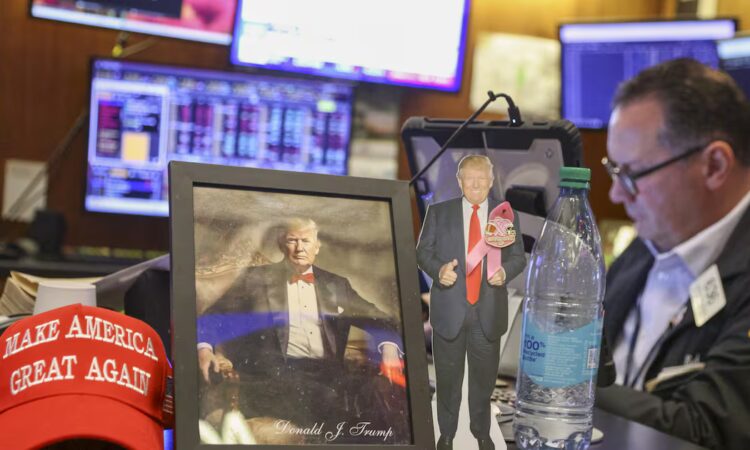
“The stock market is quite brilliant,” said Donald Trump at the recent G7 meeting in France, referring to market reactions to developments in Iran.
It marked a change for a president who usually prefers to talk about his own brilliance rather than the market’s.
However, Trump’s hyperbolic boasts about being God’s gift to the market may contain a grain of truth for one group of stocks: companies linked to bribery investigations.
A recent paper, Making Bribery Profitable Again?, examines what happened when enforcement of the US Foreign Corrupt Practices Act – a law governing overseas bribery by US companies – was effectively suspended under a Trump executive order in February 2025.
As was the case with Iran, markets responded swiftly, with the stock prices of so-called “tainted” firms – those with a history of bribery investigations – bouncing.
Companies under active investigation rose five times more than those with only past offences, while a placebo group of clean companies showed no response at all.
The initial gains in market capitalisation – about $160 million per firm – closely matched the average $150 million cost of a bribery fine, and widened to about $6.5 billion in additional value within a month. The study suggests investors price the risk of getting caught, not the act of bribery itself.
If the threat of being caught is reduced, investors appear willing to overlook quite a lot.
With the US historically central to global anti-corruption efforts, the researchers worry that weaker enforcement could ripple outward, eroding standards elsewhere.
There is also a concern that anti-corruption enforcement could be weaponised as so-called “lawfare”, aimed more at foreign rivals than domestic offenders.
The stock market may indeed be “brilliant”, as Trump put it, with that brilliance manifesting in how quickly it prices the strength – or weakness – of enforcement.


