

Key Takeaways
- AI equities trade at extremely low valuations.
- Energy shocks are historically short-lived.
- Extreme investor pessimism sets the stage for a powerful market breakout.
A Beach Ball Held Underwater
Year-to-date, the S&P 500 Index has registered average returns, gaining ~11% through mid-September. Despite the healthy gains, the 2026 market has been a complex environment for Wall Street investors to understand. Investors had to weigh positives, such as the booming AI buildout, against negatives such as the U.S.-Iran conflict and an energy shock that has left many Americans paying ~$5 at the gas pump. Overall, bullish investors are winning the battle. While most investors are content with an 11% S&P 500 gain over 9.5 months, mounting evidence suggests that in this unique market environment, stocks are being held down like a beach ball underwater and are ready to pop up violently. Below are 5 reasons why:
Nonsensical AI Fears Lead to Shrinking Valuations
The artificial intelligence industry is the fastest-growing sector on Wall Street since the late-1990s internet buildout. For context, the AI buildout is the largest industrial buildout since the late 1800s. However, although AI equities have performed well over the past year, investor skepticism about private credit, slowing growth, AI safety, and overspending has led to multi-month consolidations in these stocks.
“Words talk; numbers scream.”
As investors, it’s our job to focus on data instead of headlines. Headlines are noise and data is signal. Although the bearish narrative owns the headlines, big tech CEOs are accelerating their AI bets. The latest Wall Street estimates suggest AI-related CAPEX spending will surge from $741 billion this year to $889 billion next year (~2.5% of GDP).
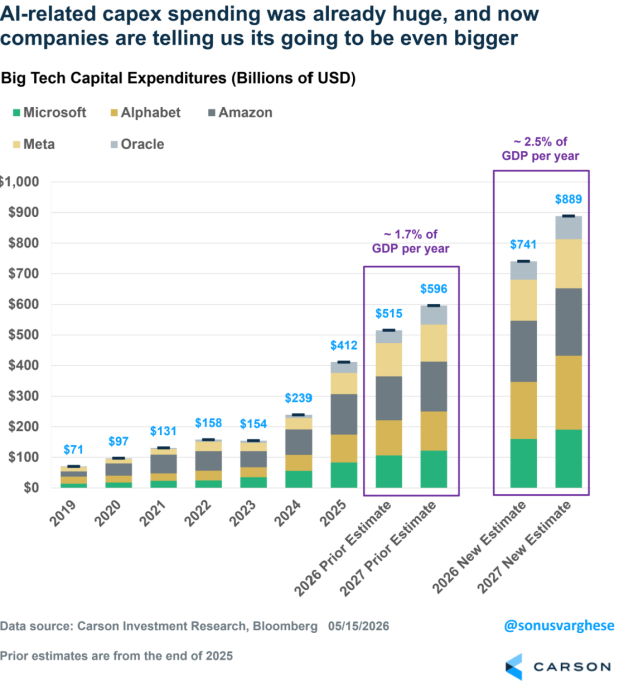
Image Source: Carson Investment Research
Meanwhile, according to RBC, over the past decade, the AI basket “commanded an average forward price-to-earnings premium of 30% to the S&P 500.” Thanks to recent AI fear-mongering, AI-related companies trade at roughly 20x forward earnings, in line with the general market.
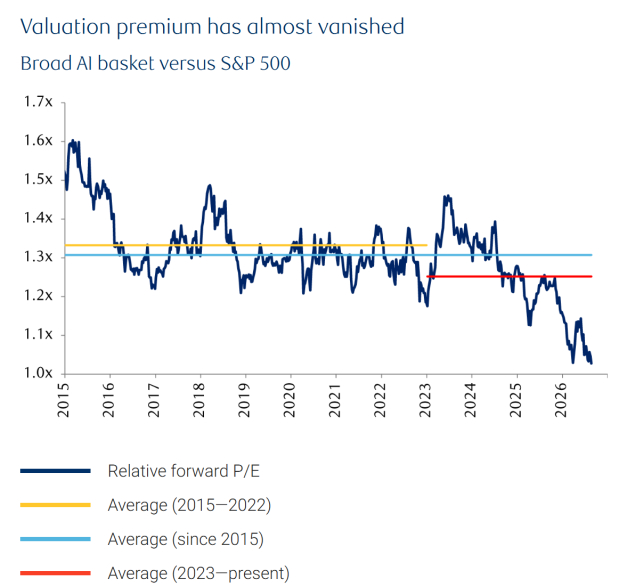
Image Source: RBS
Most shockingly, NVIDIA ((NVDA – Free Report) ), the largest and most important AI company, has an earnings multiple near 7-year lows.
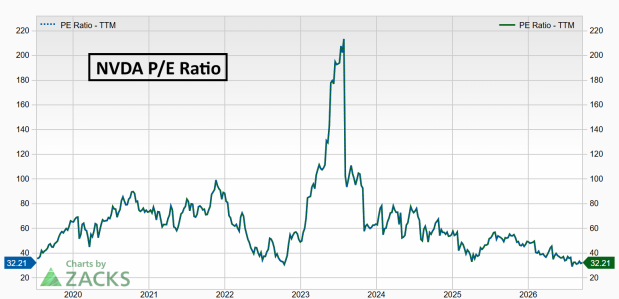
Image Source: Zacks Investment Research
Unprecedented Earnings Growth
Historically, the S&P 500 earnings grow fastest after a recession because of low baseline comparisons. However, 2026 is different. Zacks Consensus Estimates suggest S&P 500 earnings will grow 28.3% in 2026, marking some of the fastest earnings growth outside a post-recession snapback.
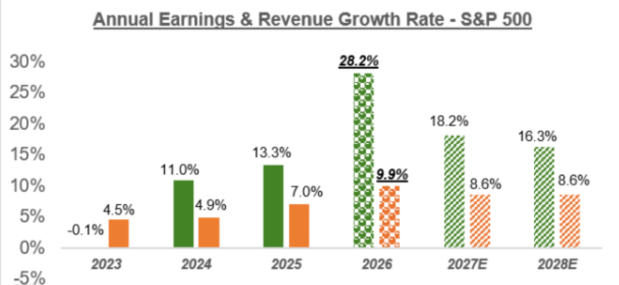
Image Source: Zacks Investment Research
Meanwhile, the tech sector is firing on all cylinders. In Q2, tech earnings jumped 101.20% thanks to robust earnings growth from AI-related companies like Micron ((MU – Free Report) ), SanDisk ((SNDK – Free Report) ), Advanced Micro Devices ((AMD – Free Report) ), and SK Hynix ((SKHY – Free Report) ).
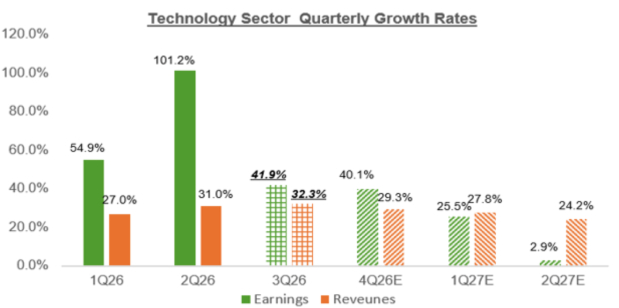
Image Source: Zacks Investment Research
While tech earnings have been impressive, Wall Street analysts expect even faster growth. For example, Zacks Consensus Estimates suggest that SanDisk will grow EPS by a staggering 3.689.34% in the current quarter and 728.23% next quarter.
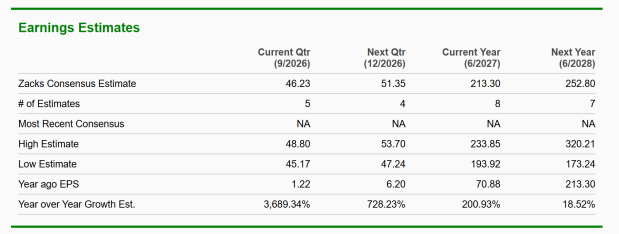
Image Source: Zacks Investment Research
Inflation Concerns Will Dissipate
Stubborn inflation has been a key concern among Wall Street investors in 2026. Inflation fears have only intensified thanks to an energy shock due to the U.S.-Iran conflict and disruptions in the Strait of Hormuz. The good news for investors is that energy shocks like the one Wall Street is experiencing now are historically short-lived, lasting roughly eight months on average.
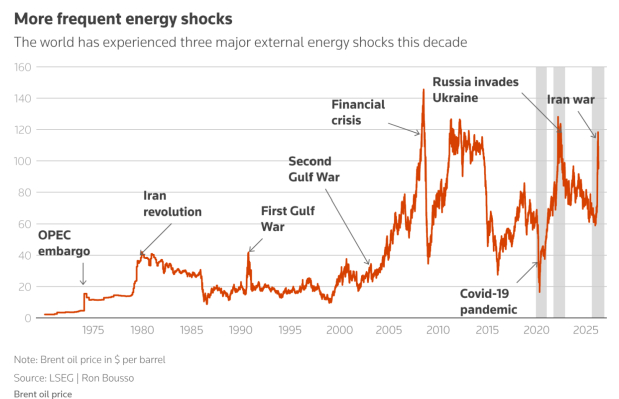
Image Source: Zacks Investment Research
The massive AI infrastructure buildup is driving up costs for electricity, chips, and hardware. However, in time, massive improvements in efficiency, supply chain optimization, and automation will drive down costs across the U.S. economy.
The Truth About Rate Hikes
Last week, Kevin Warsh and the Federal Reserve hiked interest rates for the first time since 2023. The Fed currently expects to hike rates one more time. Although the old Wall Street saying warns investors not to fight the Fed, historical data suggests a rate hike is not necessarily a death sentence for markets. Since 1946, stocks are higher 66.7% of the time a year after the first interest rate hike.

Image Source: BlueKuertic Research
Kristjen Qullamaggie, a trader who famously turned $3k into $100 million, adds perspective:
“Markets usually keep going for another six to nine months after a rate hike cycle has begun. So, it’s actually a bullish thing, not a bearish thing.”
End-of-World Sentiment
The latest GDP forecasts suggest that the U.S. economy is firing on all cylinders. In fact, the Atlanta Fed predicts that U.S. Q3 real GDP will be a scorching-hot 5.1%.
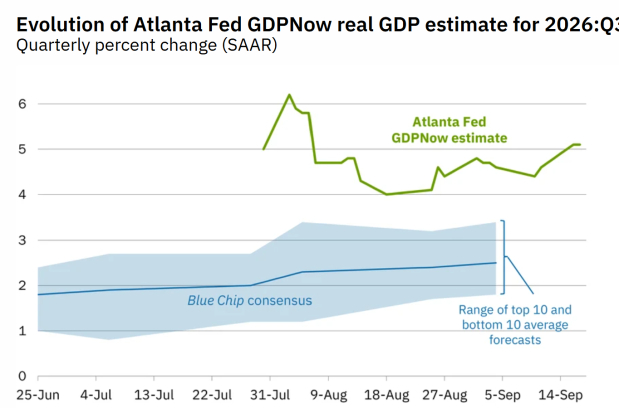
Image Source: Atlanta Fed
Despite the robust economy, investors are surprisingly bearish. According to the latest AAII Sentiment Survey, investor bullishness is just 28.8% while bearishness is 53.3%. As these investors begin to chase the market and become bullish, it will add fuel to the market’s fire.
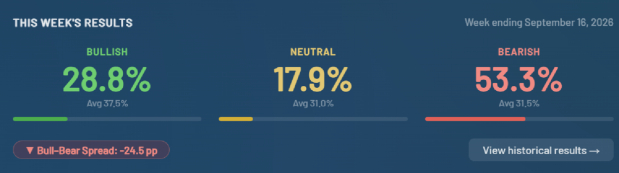
Image Source: Zacks Investment Research
Bottom Line
Geopolitical, interest-rate, and AI headlines are fueling investor skepticism. However, the underlying economic data tells a remarkably different story. Surging corporate earnings, a robust GDP, and widespread pessimism are the perfect cocktail for an explosive upside move in equities.


