
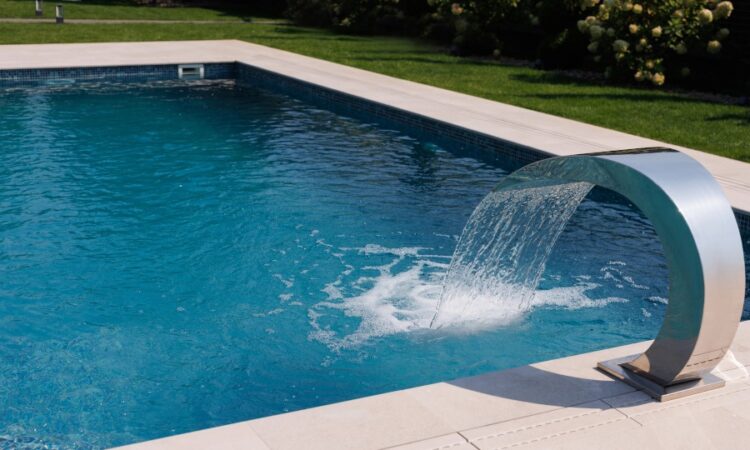
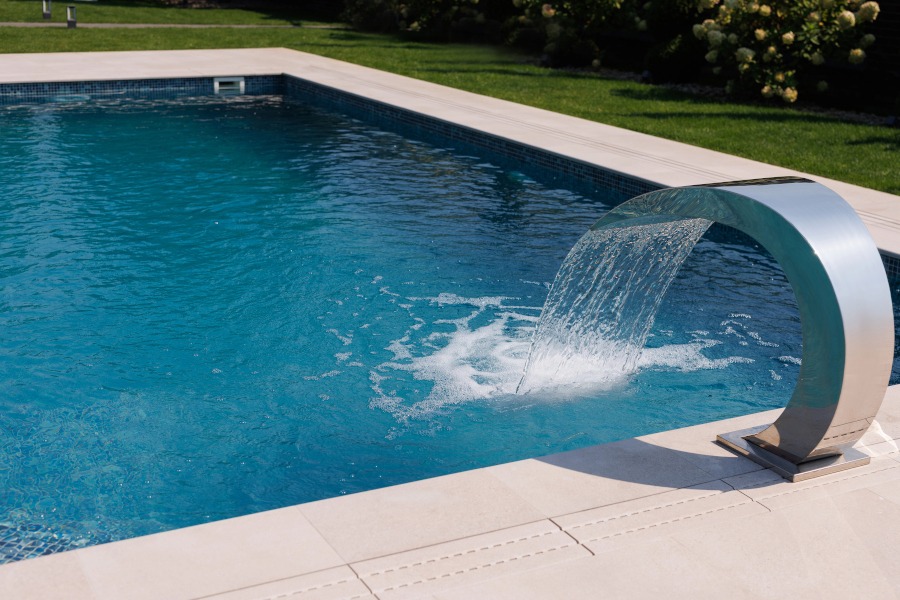
[Image source: Deposit photos]
Ask a selling agent and the answer is usually yes. Ask a developer running the numbers on a mid-market scheme and the answer is more cautious. The truth, as ever in prime residential, sits somewhere in between, and it depends almost entirely on where the property is, who it’s built for, and how well the pool itself is specified.
For investors and developers weighing whether to include a pool in a luxury new-build, the question isn’t really whether buyers like them. It’s whether the pool earns its keep over the lifetime of the asset, both at sale and through the years of ownership in between.
Where pools genuinely add value
At the top of the market, a pool is increasingly expected rather than exceptional. Beauchamp Estates data on London’s £15 million-plus market shows younger international buyers favouring turn-key new-build apartments and refurbished houses, which averaged £4,766 per square foot in 2024. At that price point, wellness amenities including pools, gyms and spas are a baseline expectation, not a premium add-on.
The same logic applies in the prime country market. Knight Frank’s Country House Index tracks the upper end of the regional market, where buyers of larger estate properties routinely look for a pool as part of the package. Developments aimed at this audience, particularly bespoke single-plot builds in the Home Counties or Cotswolds, tend to recover their pool investment at resale because the buyer profile already expects one.
Where pools become a cost burden
Drop down a tier and the maths shifts quickly. A pool installed on a £600,000 to £900,000 new-build in a suburban setting narrows the field of buyers rather than widening it. Many potential purchasers will see ongoing running costs as a deterrent, particularly where the property has a family-buyer profile
.
Those costs are not trivial. According to Homebuilding & Renovating, annual running costs for a larger in-ground pool can reach £3,000 to £4,000, with heating accounting for the majority of that figure. For a buyer already stretching to afford a higher-end property, that’s a meaningful addition to the cost of ownership and one that often gets factored into the offer.
For developers building speculatively below the prime threshold, the pool is rarely a value-positive decision. The space, build cost and maintenance overhead are usually better directed elsewhere in the specification.
Pool types and build costs at the top end
At the top end, “a swimming pool” can mean a number of quite different things, and the choice affects both the upfront cost and the long-term value. A traditional rectangular lap pool, an infinity pool with a vanishing edge, a wellness-focused natural pool, or an indoor spa pool all carry different price points, planning considerations and buyer appeal.
Build costs vary considerably depending on the type and scope of the project. Size and design complexity drive the headline figure, but site access, ground conditions and engineering requirements often have just as much influence on the final number. Infinity pools are a good example: even within that single category, the price range is wide depending on whether the overflow is single-sided or multi-sided, the volume of structural work required, and the surrounding hard landscaping. Specialist pool designer Compass Pools sets out what drives high-end infinity pool costs across these variables, and the range can be wide even within the same broad specification.
A pool designed with energy efficiency built in from the outset, rather than retrofitted later, is significantly cheaper to run and considerably easier to insure. Buyers at the prime end are increasingly diligent about these specifications. SPATA membership, warranty terms, and the energy rating of the plant equipment are all routine questions during a luxury viewing, and developers who can answer them clearly tend to close faster.
Planning, energy and the new-build picture
The Future Homes and Buildings Standards, published in March 2026 and coming into force from 24 March 2027, require new homes in England to emit at least 75% less carbon than 2013-standard properties, with low-carbon heating such as heat pumps becoming the default. For luxury new-builds with pools, this reshapes the plant specification conversation. Heat pump integration, solar gain and pool covers all factor into how a property will be assessed over the next ten to fifteen years.
Planning is generally less of an obstacle than buyers expect. Outdoor pools often fall within permitted development for the curtilage of a dwelling, though pool houses and enclosures usually require consent.
The bottom line for investors
A pool isn’t a default add-value feature. In the right market, with the right specification, it’s an asset that pays back at resale and supports premium pricing. In the wrong market, it’s an ongoing cost that narrows the buyer profile and reduces yield.
The decision, in other words, is a development question rather than a luxury one. Get the market segment right, specify properly, and the numbers usually work.


