
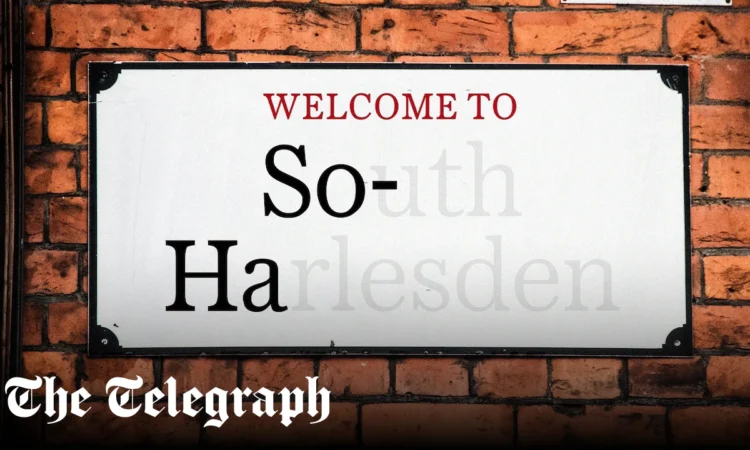
When area rebrands work
Names matter, insists Martin Bikhit, of UK Forbes Global Properties, especially at the top echelons of the property market. “They act as signals,” he says. “In markets driven by emotion and reputation, that can absolutely influence value.”
London’s Soho – a name believed to originate from a hunting cry, “So-ho”, used in the 17th century when the area was still open fields – was the original rebrand that spawned a swathe of copycats.
This once sleazy red-light district was transformed into an upmarket enclave through decades of gentrification that began in the 1980s. A similar metamorphosis occurred in New York from the 1960s in the area “South of Houston Street”, which came to be known as SoHo.
The latest iteration can be seen in South Tottenham, in north London. According to Jake Strubel, of Winkworth estate agency, locals have started to dub the up-and-coming area – which has Victorian and Edwardian terraced homes at significantly lower prices than other parts of the capital – “SoTo”.
“This definitely started as a slightly tongue-in-cheek nickname, but over the last few years it’s become commonly used among younger buyers,” Strubel says.
Roarie Scarisbrick, of the buying agency Property Vision, says: “I can’t see any harm in locals wanting to give their area an identity. However, you can immediately see the ones that feel authentic, speaking to the history or geography of a place, and those that are pure marketing nonsense.”
Ultimately, a new name means nothing if a location is fundamentally undesirable.
“There’s no point trying to coin a neighbourhood out of thin air when the scene isn’t there to justify it. It takes more than an upmarket coffee shop to put an area on the map,” says Jo Eccles, of buying agency Eccord.
What’s in a house name?
In the countryside, homes called “Cottage” are often viewed as more desirable than those identified simply by a number, says Bruce King, of Cheffins estate agency.
“A beautifully named house carries a certain romance,” he says. “‘Cottage’ evokes images of open fires, cosy sitting rooms and charming gardens, while ‘The Loft’ or ‘The Barn’ connotes features like vaulted ceilings and exposed beams.”
Emma Goodwin, a PR consultant, is the proud owner of Mulberry Cottage, a converted stable block once part of a 16th-century manor house in West Sussex.
“I always wanted a house with a name and not a number,” she says. “Of course, there’s something aspirational about it, but I do think it can make a property feel more like a place with its own identity and history too.”
Properties called “The Manor House” command the highest price tags in England and Wales, selling for an average of £1.4m in the five years to 2024, according to Savills estate agency.


