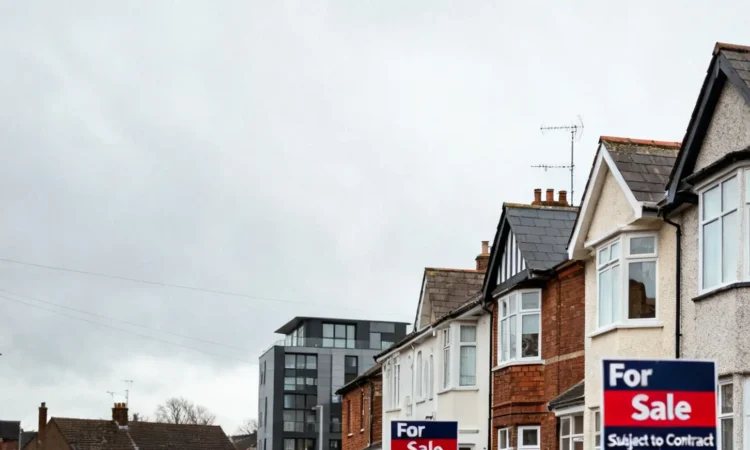
The proportion of properties securing offers within six months has fallen by 6 percentage points compared to the same period last year, according to data from Connells Group.
In January 2026, 52% of homes listed on the market received an offer within six months, down from 58% in January 2025. The share of properties receiving offers within the first month also declined from 42% to 38% year-on-year.
Mid-market properties maintain demand
Two and three-bedroom homes continue to attract the strongest buyer interest, with 55% and 53% respectively securing offers. These property types typically appeal to first-time buyers and growing families whose purchasing decisions are often driven by necessity rather than discretionary choice.
In contrast, five-bedroom properties have experienced a sharper decline, with the share receiving offers dropping from 59% in January 2025 to 41% this year. The slowdown in the upper end of the market reflects the impact of elevated mortgage costs on buyers requiring larger loans.
Regional variations emerge
Eight of the ten fastest-moving local housing markets are located in the Midlands and North, with Bury recording the quickest transaction times. Scotland remains the fastest regional market, with 68% of homes launched in January securing an offer within six months.
The data also reveals a notable difference in performance between property types. Leasehold homes saw the share receiving offers fall from 57% to 48%, a more pronounced decline than the overall market.
Aneisha Beveridge, Research Director at Connells Group, said: “The housing market is still moving, but buyers have become more selective about where they spend their money. The strongest demand continues to be concentrated in the middle market, particularly among two and three-bedroom homes which appeal to first-time buyers, growing families and households whose moves are often driven by changing circumstances rather than choice alone.”
She added: “By contrast, higher-value homes face a tougher environment. Mortgage costs remain significantly higher than they were a few years ago, and that impact is felt most in more expensive parts of the country where buyers typically need to borrow more.”
Market implications
The data suggests increasing price sensitivity among buyers as mortgage costs remain elevated compared to recent years. The divergence between mid-market and premium properties indicates that affordability constraints are primarily affecting transactions at higher price points, where buyers require larger loans.
The regional distribution of market activity, with stronger performance in the Midlands and North compared to southern regions, may reflect relative affordability in these areas. This pattern contrasts with challenges facing prime London property markets, where higher price points have created additional headwinds for transaction volumes.
The decline in leasehold property performance may also reflect growing buyer caution following increased scrutiny of leasehold terms and ground rent arrangements in recent years.