
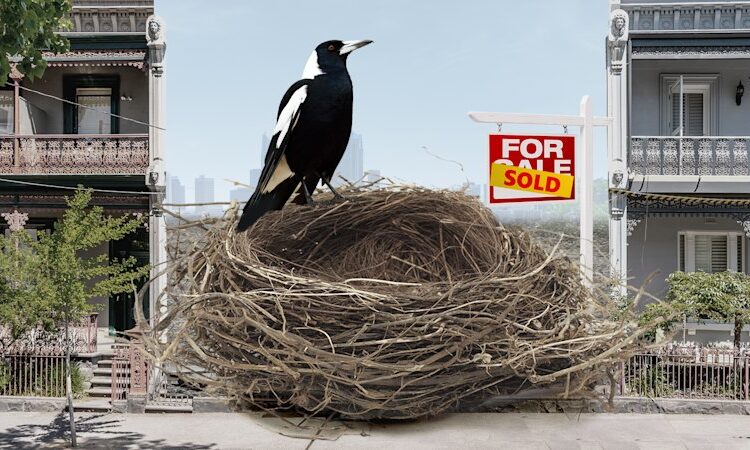

Collingwood, one of the AFL’s most financially powerful clubs, has paid close to $4 million for a residential property in South Melbourne to house players and staff.
The Magpies confirmed the purchase of a property in South Melbourne, and which was already in use to provide accommodation to either AFL or AFLW players or staff.
Collingwood have followed the lead of another AFL giant, West Coast, who purchased land and constructed four separate units next to their new training base, Mineral Resources Park, at Lathlain, at about the same total cost of $4 million.
The Eagles have likewise used their properties as accommodation for players and/or staff for what they termed short-term housing of club personnel. The project was completed two years ago.
That arguably the AFL’s richest two clubs have spent the same amount investing in housing for players and staff is a measure of how clubs utilise their surplus funds to gain an edge in the competition, and of the challenges posed when relocating players and staff in terms of what been a tight housing market.
Port Adelaide secretly purchased 26 properties surrounding their Alberton base over three years at a cost of $20 million, as reported in February, with the AFL providing $10 million in a line of credit. Port plans to develop a housing precinct, Alberton Square.
The renting to players has been approved by the AFL, who have to check that the players (or football staff) are renting the property at close to market rates and that there is no benefit that would breach the league’s salary cap (or soft cap on football spending).
A Collingwood spokesperson confirmed the purchase of the property, describing it as a “long-term investment that helps secure the club’s future”.
Collingwood made the purchase at the end of last year, after their annual general meeting, in what they have dubbed a new version of “Coventry House” – the residence near their former base of Victoria Park in Abbotsford, where the club would place young players, especially from interstate or the country, back in the 1980s.
Collingwood sold Coventry House, along with a number of residential properties next to Victoria Park, when the club experienced financial difficulties in the mid to late ’90s. The value of those homes, however, rose rapidly after their sale.
Today, the $4 million invested in the new Coventry House (named after 1920s and ’30s greats Syd and Gordon Coventry) is one of Collingwood’s three major non-football assets. The Magpies have close to $30 million in a future fund, which is invested in shares and alike and provides a significant annual return.
They have the Glasshouse at their training and administrative base near Melbourne Park, in a partnership with a catering and hospitality company the Big Group. The venue can be hired out for functions and includes the Magpie Nest cafe.
Collingwood reported revenue of $96 million in 2025 and cash, cash equivalents and financial assets of $54 million. They made a statutory profit of $4.5 million, which includes write-downs and depreciation. The operating profit before depreciation and amortisation was $9.3 million.
Fellow Victorian powerhouses Hawthorn, Essendon and Richmond do not own residential properties, although each has significant investments. The Hawks have spent tens of millions on their new base at Dingley, the Kennedy Community Centre, and retain a strong balance sheet, while the Tigers have already spent much of the $100 million-plus allocated to the redevelopment of their Punt Rd headquarters.
Keep up to date with the best AFL coverage in the country. Sign up for the Real Footy newsletter.
 Jake Niall is a Walkley award-winning sports journalist and chief AFL writer for The Age.Connect via X or email.


