
Summary: Polígono Empresarial San Miguel de Allende (PESMA) is expanding its industrial capabilities with a nearly US$50 million, 60 MVA electrical substation designed to support advanced manufacturing, data centers, artificial intelligence and automation. The infrastructure strengthens PESMA’s position as Guanajuato seeks to attract technology-intensive investment, building on more than US$3.5 billion in accumulated private capital and approximately 8,000 direct jobs.
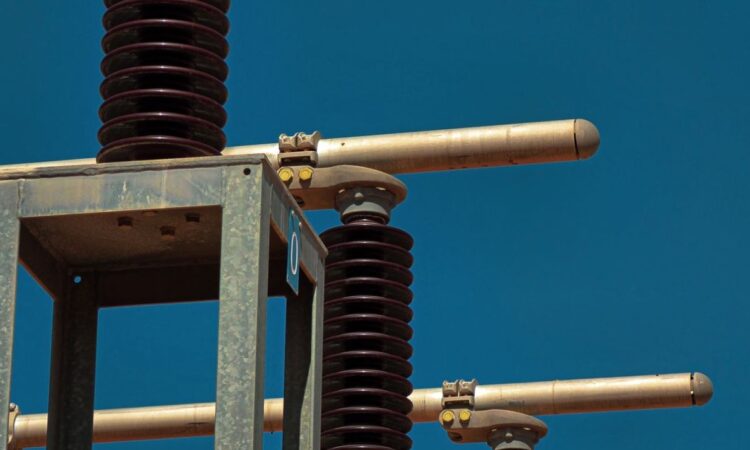
The Polígono Empresarial San Miguel de Allende (PESMA) is strengthening its position as an industrial hub in Guanajuato with the launch of a new 60 MVA electrical substation, backed by an investment of nearly US$50 million. The infrastructure is designed to support companies with high electricity requirements, including advanced manufacturing, digital infrastructure, data centers, artificial intelligence and automation.
The substation was inaugurated during the Guanajuato Suma event, where PESMA General Director Manuel Madrazo highlighted the industrial park’s development over the past decade and its growing role in diversifying San Miguel de Allende’s economy beyond tourism.
With 24 companies currently operating at the park and six additional companies under construction or preparing to begin operations, PESMA has accumulated more than US$3.5 billion in private domestic and foreign investment. The development has also generated approximately 8,000 direct jobs.
PESMA Expands Its Industrial Footprint
The new energy infrastructure comes as PESMA prepares for another stage of expansion, building on the industrial activity already established at the complex.
Madrazo said the project was created more than a decade ago to complement San Miguel de Allende’s tourism-driven economy with a platform focused on modern industrial development. Since then, the park has attracted companies operating across different manufacturing and industrial activities, contributing to the municipality’s economic diversification.
The six projects currently under development are expected to further expand the park’s industrial base as companies establish or increase their operations. The accumulated investment of more than US$3.5 billion demonstrates the scale of private capital already committed to the development.
New Substation Adds 60 MVA Capacity
Reliable electricity infrastructure is becoming increasingly important as industrial projects demand greater power capacity and operational continuity, making the new PESMA substation a central component of the park’s expansion strategy.
The nearly US$50 million project provides 60 MVA of installed capacity and uses a reduction configuration from 230 kV to 13.8 kV. It also incorporates N-1 redundancy across all levels, a configuration intended to improve reliability and operational resilience.
Construction of the substation generated more than 400 jobs. Its permanent operation is expected to employ approximately 40 people working around the clock to support the facility.
Madrazo said the project resulted from cooperation among private-sector participants, development bank Nafin and the Comisión Federal de Electricidad, or CFE.
Energy Capacity Targets Technology-Intensive Projects
The infrastructure investment also positions PESMA to pursue a new generation of industrial projects, particularly those linked to digitalization and advanced technologies.
The park has identified data centers, digital infrastructure, artificial intelligence, automation and agentic technology among the activities that could benefit from its expanded energy capacity. These industries can require substantial electricity availability and reliable service because interruptions can affect continuous operations and computing-intensive processes.
As companies expand their use of artificial intelligence and digital systems, industrial developers are increasingly integrating energy infrastructure into their investment propositions. Access to sufficient power can determine whether a location is capable of supporting a project from its initial deployment through subsequent expansion phases.
Public-Private Cooperation Supports Development
The substation project also illustrates the importance of coordination between industrial developers, government institutions and financial organizations in expanding the infrastructure needed to support investment.
The Guanajuato Suma event brought together government officials, business representatives and investors, including Guanajuato Gov. Libia Dennise García Muñoz Ledo and San Miguel de Allende Mayor Mauricio Trejo Pureco.
Representatives from the state’s economic development sector also participated, while Nafin and CFE were recognized for their contributions to the infrastructure project.
Guanajuato Announces 17 New Investments and 3,500 Jobs
In other related news, MBN reported that Guanajuato announced 17 new investment projects expected to generate more than 3,500 jobs as the state launched Guanajuato SUMA, a strategy focused on attracting investment to technology-intensive industries and expanding economic development beyond its traditional industrial corridor.
The projects involve companies from the United States, Brazil, Britain, France, Canada, Taiwan and China, with investments spanning data centers, renewable energy, automotive manufacturing, food, services and industrial developments. The projects will be distributed across municipalities including San Miguel de Allende, Juventino Rosas and Guanajuato capital.
With these additions, Guanajuato has secured 76 committed investments and 18,811 new jobs under the current administration, reaching 80% of its six-year investment target.
Guanajuato SUMA establishes five economic development pillars and prioritizes sectors including semiconductors, artificial intelligence, data centers, electromobility, advanced manufacturing, medical devices, aerospace and clean energy. The state targets US$8 billion in investment through 2030, while seeking to locate at least 15% of new projects outside the traditional industrial corridor.
The strategy also emphasizes workforce development and supplier integration through microcredentials, SME support and supplier certifications, while aiming to strengthen energy availability across strategic industrial parks and connect regional economic capabilities with innovation and specialized talent.


