Property investors are becoming more selective rather than leaving the market, with new research showing demand shifting towards higher-yielding properties and new housing as rents remain strong and yields improve.
The latest PropTrack Terri Scheer Investor Report finds investor activity has softened after a strong 2024 and 2025, hit by four interest rate rises this year and major changes to negative gearing and capital gains tax in the May Federal Budget.
But the report argues the fundamentals remain attractive in many markets: rental conditions are tight, rents are still rising, yields are improving as dwelling prices soften and more than nine out of ten investor resales have been profitable.
The details
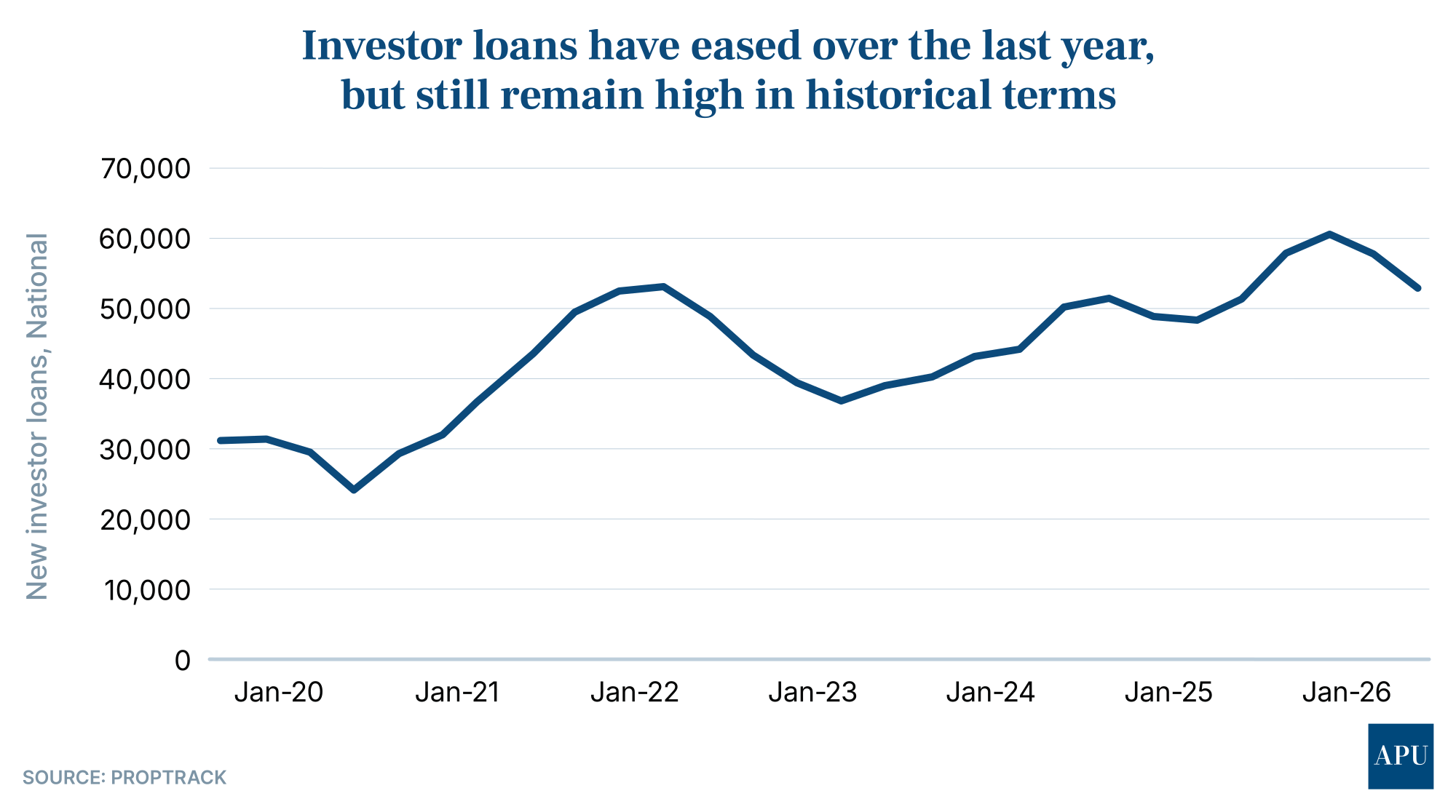
Investor demand in the residential property market has eased over the past year.
New investor loans peaked at more than 60,000 in the final quarter of 2025 before higher interest rates began to bite.
By the June quarter of 2026, investor loan numbers had fallen 9%, compared with a 3% decline in owner-occupier loans.
REA Group’s PropTrack says the May Budget accelerated that slowdown by removing negative gearing from established properties purchased after Budget night and changing the way capital gains will be taxed from July 2027.
But property investors appear to be changing strategy rather than disappearing.
While overall investor lending fell in the June quarter, loans used to buy or build new homes actually rose 24%.
That’s consistent with the Government’s decision to retain negative gearing benefits for new housing, while removing them from future purchases of established homes.
REA Group Senior Economist Angus Moore says the policy changes are likely to push investors towards properties capable of generating more income.
“Over the long term, the budget changes may lead to a shift in investor demand, as investors look towards properties with higher yields,” he says.
“Low-yielding and loss-making rental properties are likely to become less attractive to investors, as negative gearing will be no longer available for existing residential properties.”
Rents and yields remain supportive
That shift is already showing up in buyer behaviour.
PropTrack says investor enquiries on REA Group’s realestate.com.au have moved towards higher-yielding properties since the Budget, with investors increasingly looking for assets more likely to be cash-flow positive rather than relying primarily on future capital gains.
The timing is significant because rental conditions remain tight.
The report says major capital-city vacancy rates remain below 2%, while rental prices have continued to increase despite slower population growth.
Low vacancies have helped push rents sharply higher since 2020, providing stronger income returns for landlords.
At the same time, softer dwelling prices are lifting gross rental yields.
PropTrack says national yields have increased in recent months as rents rise while home prices fall.
Most investors are still making money
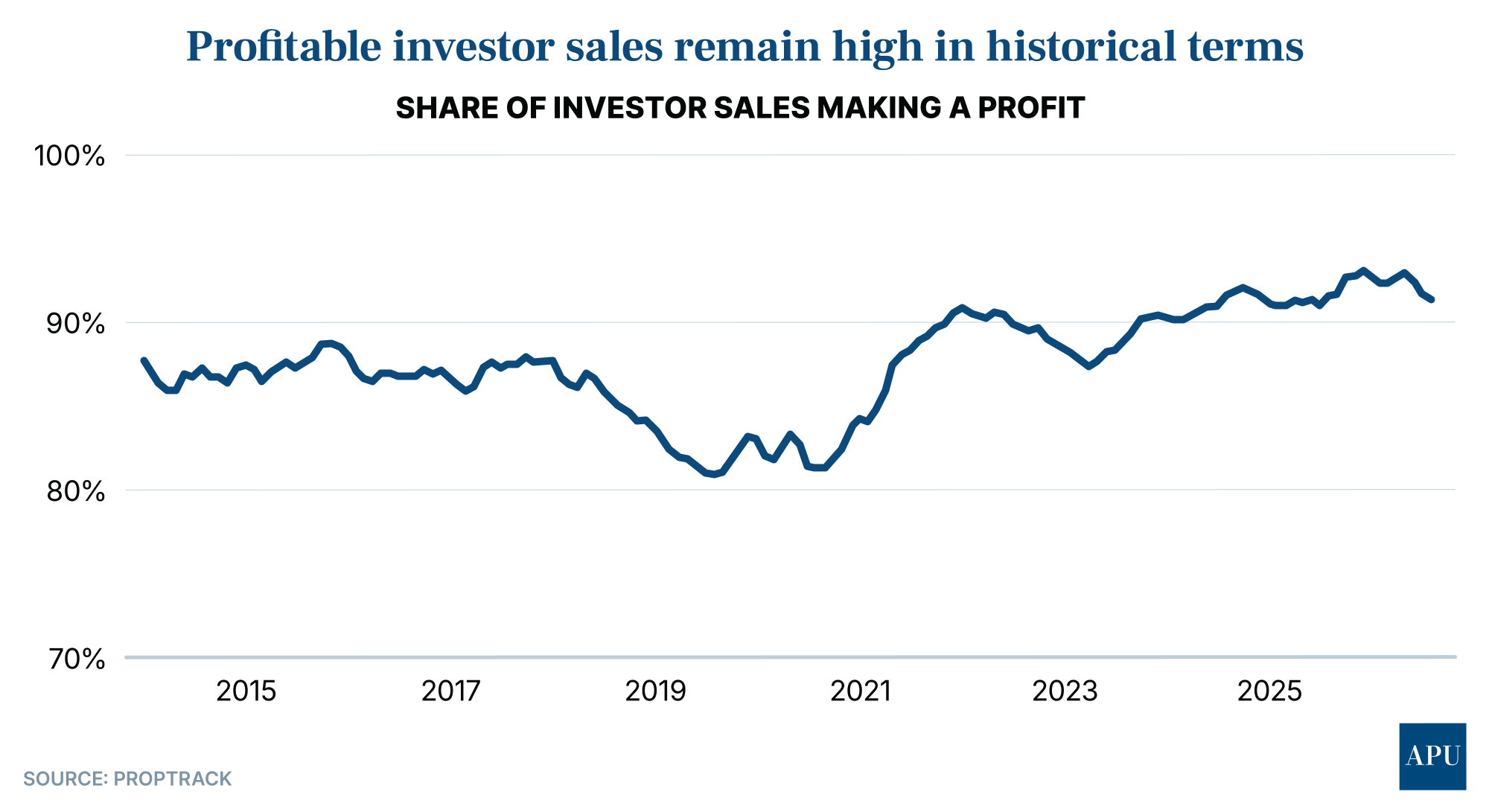
Perhaps the clearest reminder of the longer-term investment potential of residential property is what has happened to investors who have recently sold.
PropTrack says around 93% of investment properties sold so far in 2026 have changed hands for more than their original purchase price.
Among profitable investor resales nationally, the median holding period was 9.6 years and the median nominal gain was $345,000.
The strongest results were in Brisbane and Adelaide, where 99% of recent investor resales were profitable, followed by Perth at 98%.
Median gains on profitable sales were $520,000 in Brisbane, $440,000 in Adelaide and $410,000 in Perth.
Even Sydney recorded a 90% profitable resale rate, with a median profit of $380,000 among successful sellers.
Melbourne was weaker but still recorded an 85% profitable share and a median gain of $270,000.
Those figures do not account for interest, tax, maintenance or other holding costs, but they underline the substantial equity gains accumulated by long-term investors despite the recent easing in national property prices.
Where investors are looking
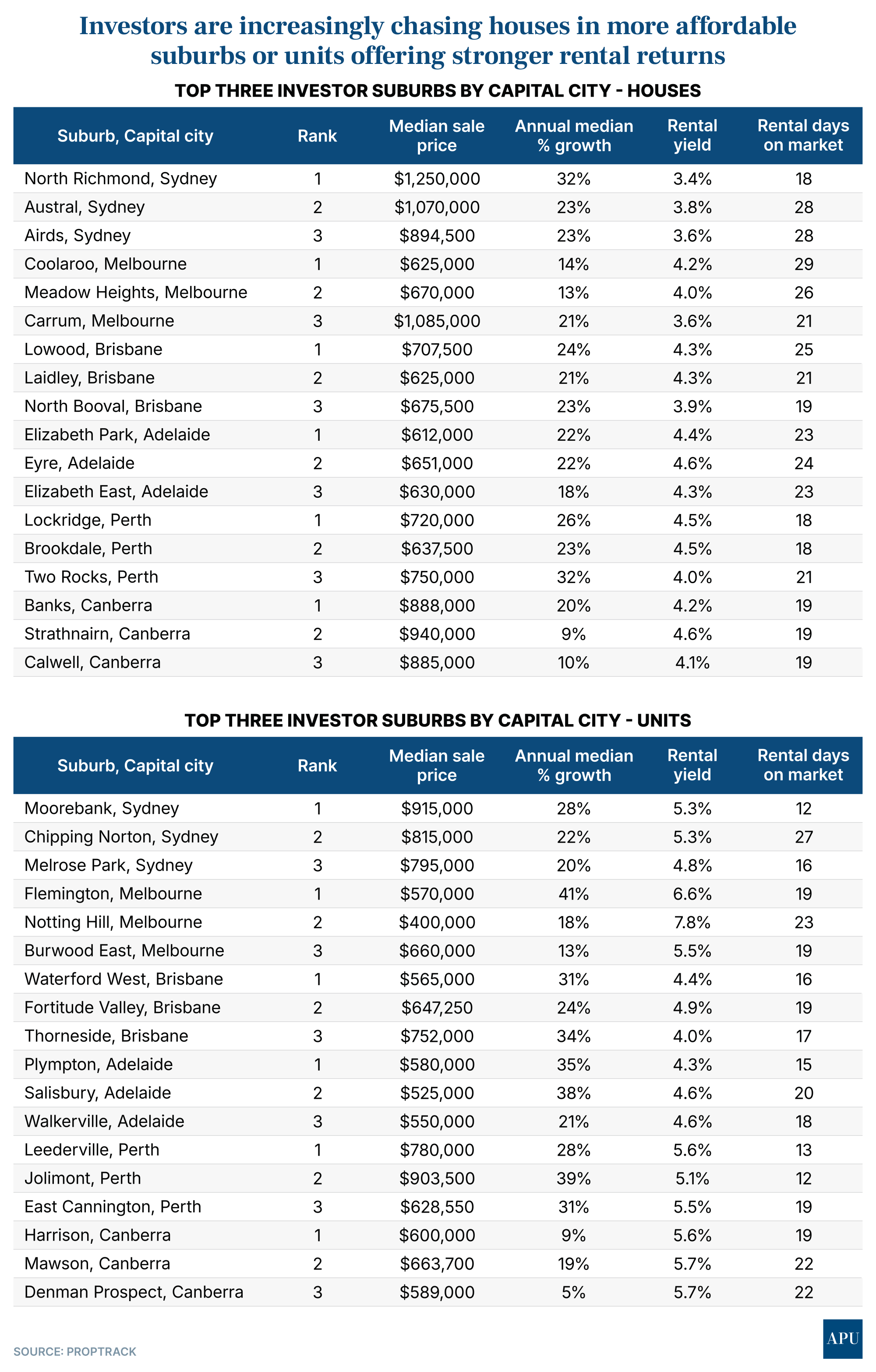
The PropTrack Terri Scheer Investor Report also highlights a clear preference among investors for more affordable suburbs offering stronger rental returns.
The report includes suburb rankings based on three metrics considered important to investors: annual home price growth, gross rental yields and rental demand, measured by the number of days a property is listed before being leased on realestate.com.au.
In Sydney, the report highlights North Richmond, Austral and Airds for houses and Moorebank, Chipping Norton and Melrose Park for units.
Coolaroo, Meadow Heights and Carrum are listed as prime suburbs for house investments in Melbourne, while Flemington, Notting Hill and Burwood East score highest for units.
In south-east Queensland, the report ranks Lowood, Laidley and North Booval highly for houses, and Waterford West, Fortitude Valley and Thorneside for units.
The take-out
PropTrack expects national prices to remain under pressure through the rest of 2026 as this year’s rate hikes continue to flow through the market, with a potential turning point in 2027.
But that softer market may itself be creating opportunities.
Purchase prices have eased, rents remain high and yields are improving.
“Strong rental demand and improving yields reinforce why residential property continues to be an attractive long-term investment option for many Australians,” Terri Scheer Executive Manager Carolyn Parrella says.
“The findings show investors aren’t necessarily leaving the market, they’re adapting to it.”
Property investment in 2026 looks less like the old strategy of accepting large short-term losses and hoping capital growth over the longer term eventually makes up the difference.
Instead, investors are increasingly favouring properties that stack up better on yield, rental demand and purchase price from day one.
And in a market where rental housing remains scarce, rents are still rising and prices have softened, PropTrack argues there are still compelling opportunities for investors willing to be more selective.