
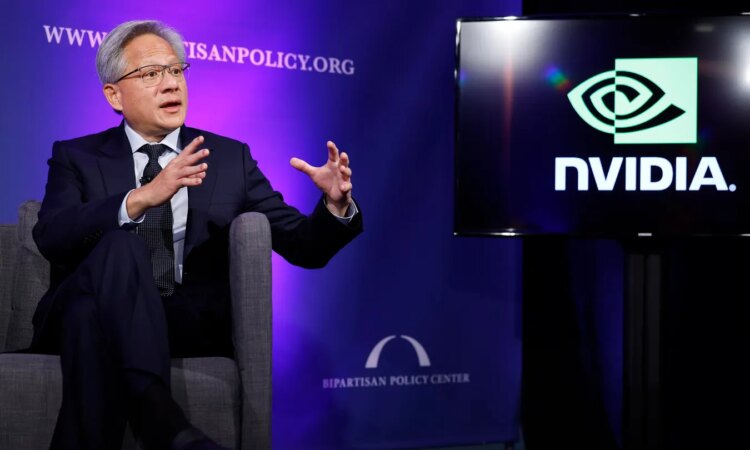

WASHINGTON, DC – SEPTEMBER 27: NVIDIA founder, President and CEO Jensen Huang speaks about the future of artificial intelligence and its effect on energy consumption and production at the Bipartisan Policy Center on September 27, 2024 in Washington, DC. Huang said that machine learning uses a large amount of energy but that artificial intelligence will save energy in the long run due to it’s efficient computing abilities. Founded in California in 1993, NVIDIA is the world’s most valuable publicly traded company, with a market capitalization of over $3.3 trillion. (Photo by Chip Somodevilla/Getty Images)
Getty Images
Why Great Businesses Can Be Terrible Investments
Investors, including traditional old-school value ones, love exceptional companies.
They want strong brands, high margins, recurring revenue, dominant market positions, and management teams with a strong record of execution. That instinct makes sense. A great business is easier to understand, easier to defend, and usually easier to hold through volatility. But a great business is not automatically a great investment. That is where many investors get into trouble.
They confuse the quality of the company with the attractiveness of the stock. They assume that because a business is exceptional, the shares must also offer an exceptional opportunity. But the stock market does not reward quality in isolation. The stock market rewards the gap between what is expected and what is delivered. A wonderful company can become a terrible investment when the price already reflects too much optimism. A mediocre company can become an extraordinary investment when expectations have collapsed, and the business performs even slightly better than feared.
That difference between the company and the security is one of the most important distinctions in investing. Most investors understand the distinction intellectually. Emotion makes them forget it when money is involved.
The Business and the Stock Are Not the Same Thing
A company is an operating asset. A stock is a claim on that asset at a specific price. Those are not the same thing. A great company can continue growing, gaining market share and producing record earnings while its stock underperforms for years. That happens when investors pay too much for the business in the first place. The company may deliver. The stock may not. Microsoft was still a great business after 2000. Revenue, earnings, and free cash flow continued to grow, Windows remained dominant, and Office remained deeply embedded across corporate America.
But the stock had been priced for near perfection at the height of the technology bubble. By the end of 2012, Microsoft’s free cash flow per share had roughly tripled from its 1999 level, yet the stock price was still more than 50% below where it had ended 1999.
The business delivered. The investment did not. The problem was not Microsoft. It was the price investors had paid for Microsoft. They had pulled so much future growth into the valuation that years of genuine operating progress were needed merely to catch up with the expectations already embedded in the stock.
This is because returns depend not only on what the business does. They are determined by what the business does relative to what the market already expects. If investors expect 25% growth and the company delivers 20%, the business may still be excellent. The stock can still fall. If investors expect earnings to collapse and they merely remain flat, the business may still be mediocre. The stock can still rise sharply.
Markets change their prices based on expectations, not just on absolute quality. That is why the first question should not be whether a company is good. It should be whether the current price leaves room for the company to be better than expected.
Great Companies Become Over-Owned
The best businesses attract capital. Institutional investors want them. Growth funds want them. Index funds accumulate them as their market values rise. Analysts recommend them because the story is easy to explain. Management appears on television. The stock becomes a default holding for investors who want exposure to quality. Over time, the shareholder base becomes crowded. Nvidia is a recent example. The company became the market’s default way to own the artificial-intelligence boom. Growth funds accumulated Nvidia shares, passive funds bought more as Nvidia’s market value increased, analysts repeatedly raised their targets, and Jensen Huang became one of the most visible executives in the world.
The business continued to deliver extraordinary results. Nvidia’s fiscal 2025 revenue more than doubled to $130.5 billion. But by then, so many investors owned the stock for the same reason that even a challenge to the prevailing AI narrative could create enormous pressure. When DeepSeek raised questions in January 2025 about how much computing power future AI models might require, Nvidia fell 17% in one session and lost almost $600 billion in market value.
That did not suddenly make Nvidia a bad business. It showed what can happen when an exceptional company becomes a crowded investment and almost every shareholder is relying on the same expectations.
Crowding does not mean the business is weak. It means there may be fewer incremental buyers left. That matters because stocks need new demand to keep outperforming. When almost everyone already owns the company, continued gains depend on investors increasing their position, valuations expanding further or earnings exceeding already elevated expectations. The margin for error narrows.
An over-owned stock can fall on results that would have been celebrated two years earlier. Revenue grows, but not fast enough. Margins remain strong, but stop expanding. Guidance is raised, but by less than investors hoped.
The company has not failed. The expectations have become impossible. This is a common feature of market favorites. Investors gradually stop asking what the business is worth and begin assuming that quality itself justifies any price. It does not.
Valuation Is the Price of Optimism
Valuation is often treated as a secondary concern when the business is exceptional. Investors say the company deserves a premium. That may be true. The problem is that premiums can become detached from any reasonable outcome. A high valuation is not automatically dangerous. Some businesses deserve to trade at high multiples because they have superior economics, long growth runways, and strong competitive advantages.
The danger appears when the valuation requires the company to remain nearly perfect. At that point, the stock is no longer priced for success. It is priced for a very specific version of success. The company must hit the revenue target, preserve margins, avoid competition, maintain customer loyalty, and continue allocating capital intelligently. It may also need interest rates, investor sentiment, and industry conditions to remain supportive. That is a lot to ask of any business. The higher the valuation, the more investors have already brought the future into the present. Investors are paying today for cash flows that may not arrive for years. If those cash flows are delayed, the stock can reprice sharply, even if the long-term story remains intact.
The business may still be great. The investment may still have been poor.
Expectations Matter More Than Reputation
Investors often rely on reputation. They buy companies described as best-in-class, category leaders, or compounders. Those labels may be accurate, but they can also become substitutes for analysis. A strong reputation attracts a premium valuation. It also creates a significant barrier. Once the market believes a company can do no wrong, even a small operational issue becomes important. A modest slowdown can trigger a large decline because the market is not simply adjusting earnings. It is adjusting the entire belief system around the stock. This is why widely admired companies can produce disappointing returns even while remaining widely admired. The issue is not that investors were wrong about the business. They were wrong about the price.
Novo Nordisk had become one of Europe’s most admired companies and the market leader in obesity drugs. Wegovy and Ozempic transformed the business; obesity-care sales rose 56% in 2024 and investors began treating Novo as one of the market’s great long-term compounders. That reputation created an enormous hurdle.
In December 2024, its next-generation obesity drug, CagriSema, produced average weight loss of 22.7% in a late-stage trial. That was an impressive result, but it fell short of the roughly 25% investors had been expecting. The shares fell as much as 27% in one day, wiping roughly $125 billion from the company’s market value.
The market was not suddenly deciding that Novo Nordisk was a bad business. It was reassessing the belief that the company could continue executing almost perfectly.
That is what happens when reputation becomes embedded in the valuation. A good result is no longer enough. The company must deliver the exceptional result investors have already paid for.
The reverse also happens. A company with a poor reputation may carry almost no expectations. Investors expect management to disappoint, margins to remain weak, and growth to be limited. If the business stabilizes, cuts costs, sells an underperforming division, or improves capital allocation, the stock can re-rate quickly. The company does not need to become great. It only needs to become less disappointing than the market expected.
Mediocre Businesses Can Become Exceptional Investments
Some of the best investments begin with companies that few investors want to own. They may be cyclical, poorly managed, overleveraged, or operating in an unfashionable industry. The business may have disappointed shareholders for years. Analysts may have lost interest. Institutional ownership may be low. That sounds unattractive, and sometimes it is.
But when expectations are sufficiently depressed, the risk-reward ratio improves. A mediocre business priced for failure does not need heroic performance. It may only need to survive, refinance debt, improve margins, or stop destroying capital. The stock can respond long before the business becomes objectively good. This phase is where investors often misunderstand turnarounds. They wait until every problem is solved before they show interest. By then, the market has usually recognized the improvement and the valuation has already moved. The opportunity exists in the gap between the old perception and the new reality. This does not mean investors should buy low-quality businesses indiscriminately. Most weak companies remain weak. Some cheap stocks deserve to be cheap. The work is identifying which problems are temporary, which are structural, and whether management has a credible path to change the outcome.
A mediocre company with a real catalyst can be a better investment than a great company with no room for error.
The Best Business Can Still Have the Wrong Owners
Ownership matters here too.
Great businesses often attract shareholders with similar expectations. Growth managers, momentum funds, and passive vehicles can all concentrate their investments in the same names. That ownership can appear stable while the stock is rising. It becomes less stable when growth slows. If several funds own the company for the same reason, they may all sell for that same reason. A revenue miss, guidance reduction, or valuation compression can trigger a rapid change in positioning. The problem is not only that the stock was expensive. It is that the shareholder base was built around a narrow set of expectations. When those expectations break, the selling can become self-reinforcing. This is the opposite of what happens in a neglected company. A stock with limited ownership and low expectations may have few forced sellers left. If the business improves, even modestly, new buyers can have a powerful effect on the price. Also worth remembering is that the great company may already have every investor, while the mediocre company may have none. That difference can matter more than the difference in business quality.
Quality Without Price Discipline Is Not Investing
There is a tendency to treat valuation as optional when a company is exceptional. It is not. Paying attention to price does not mean avoiding great businesses. It means understanding what level of performance the current valuation already assumes. Investors should ask several questions. What does the company need to deliver to justify the price? How much growth is already embedded? What happens if margins flatten? Who owns the stock? What would cause those shareholders to leave? Is the market pricing a range of outcomes or only the best one? Those questions are not designed to talk investors out of quality. They are designed to prevent investors from paying for quality twice. The first payment is in the valuation. The second payment comes when expectations come back to normality.
The Investment Opportunity Is in the Gap
Great businesses can become terrible investments. You find them by comparing reality with expectations. I am not arguing against quality. I am arguing against paying a price that assumes everyone already knows exactly how remarkable the business is. The opportunity comes when the market has misjudged what happens next, whether the company is exceptional or merely improving. Investing is not about finding the best company in the market. It is about finding the largest gap between what the market believes and what is likely to happen. That is why quality alone is never enough. The question is not simply, “Is this a remarkable business?” It is, “What am I paying? What does the market expect? And how much has to go right from here?” A great company can still be a terrible investment when everyone already knows it is great. And a mediocre company can become an extraordinary one when almost everyone has already given up.


