Agricultural Development Programme plans to double financing portfolio to EGP 10bn, expand foreign currency lending
Egypt’s Agricultural Development Programme (ADP), affiliated with the Ministry of Agriculture and Land Reclamation, plans to double its financing portfolio from EGP 5bn to EGP 10bn while expanding lending in both local and foreign currencies to support agricultural investment, exports and food security.
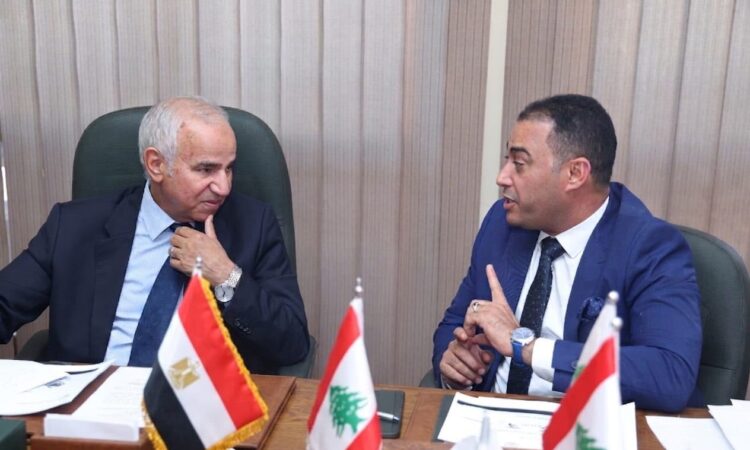
The plans were announced by Hamdy Azzam, Director of the Agricultural Development Programme, during a meeting organised by the Agriculture Committee of the Egyptian Lebanese Businessmen’s Association (ELBA), chaired by Haitham Akry El Hawary and attended by investors, representatives of the agricultural sector and financial institutions.
Azzam said the programme serves as one of the government’s principal financing mechanisms for agricultural investment, operating entirely through development finance provided by international financial institutions without placing any burden on the state budget.
The programme currently operates through a network of 16 participating banks, with the Commercial International Bank (CIB) serving as the lead agent bank.
As part of its expansion strategy, the programme aims to increase available financing to EGP 10bn while broadening lending in both Egyptian pounds and foreign currencies. It will also provide foreign currency loans of up to $1.5m per project to support agricultural exporters, boost export revenues and increase Egypt’s foreign currency earnings, in line with the Ministry of Agriculture’s strategy to promote agricultural production and agro-industrial development.
Azzam said the programme finances a wide range of agricultural activities, including smallholder farming, milk collection centres, contract farming, solar energy systems, livestock and poultry production, food processing, modern irrigation, post-harvest operations, agricultural value chains and supporting industries. Alongside financing, it also provides technical assistance to enhance project sustainability and improve operational performance.
He added that the programme is implemented in partnership with several international development institutions, including the Japan International Cooperation Agency (JICA), the European Union and the French Development Agency (AFD), in addition to other development partners.
The ADP also works closely with banks, finance companies and civil society organisations to introduce innovative financing products, particularly in Upper Egypt governorates such as Sohag, Assiut, Qena and Minya.
Azzam identified fragmented agricultural land holdings and limited access to finance in some rural areas as two of the sector’s principal challenges. He said the programme is addressing these issues by developing more flexible financing mechanisms tailored to the specific characteristics of agricultural activities and the needs of small-scale producers.
He noted that agriculture contributes around 15% of Egypt’s GDP, employs more than 18% of the country’s workforce and supports the livelihoods of millions of families. Against the backdrop of global economic challenges and rapid population growth, he said strengthening food security has become a strategic national priority.
According to Azzam, the programme is also focusing on increasing investment in agriculture, livestock, poultry, fisheries, agricultural value chains, marketing and exports as key drivers of economic growth, job creation and greater private sector participation in sustainable development.
For his part, Haitham Akry El Hawary, Chairperson of ELBA’s Agriculture Committee, said the committee is working to strengthen cooperation among financial institutions, private sector companies and government entities to stimulate agricultural investment, enhance the competitiveness of Egyptian agricultural products, reinforce food security and expand agricultural exports.