
Indian Rupee Record Low Against US Dollar. What Is Causing the Sharp Fall as Yen, Yuan, Taka and Other Asian Currencies Struggle Against USD
6
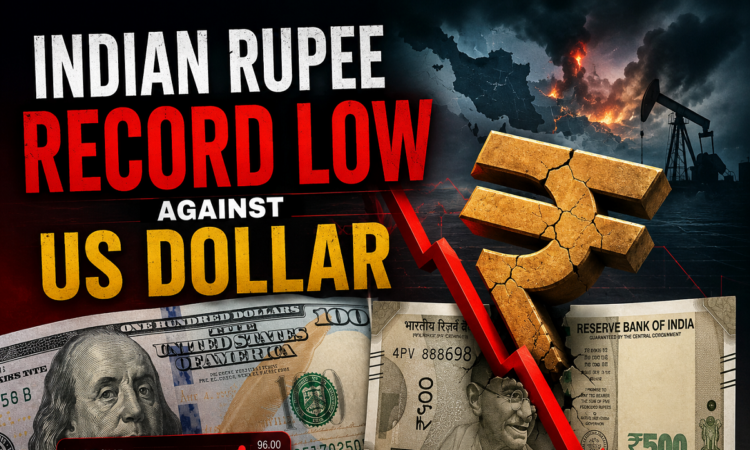
The Indian rupee dropped to a record low on Friday, May 15. The Indian currency neared the 96 mark against the benchmark US dollar due to rising demand for the greenback in the global market amid uncertainties in West Asia.
According to the latest data, the Indian rupee is inches away from touching the 96 mark against the US dollar. As of 03:45 pm (IST), the currency was trading at 95.79 against the US dollar, compared to 95.57 at the previous market close.
During Friday’s trading session, the Indian currency came under pressure due to higher demand for US dollars in the global market after US President Donald Trump signaled that the conflict in West Asia may not end anytime soon.
According to the latest data, the Indian currency has dropped by 2.6 per cent against the dollar over the last month. The rupee has also weakened by around 5 per cent since the US-Iran conflict began.
What Impact Will the Weakening Indian Currency Have?
India is being hit hard by the US-Iran war, as the country imports nearly 90 per cent of its oil needs and around half of its gas requirements. This could place India in a more vulnerable position if the conflict continues for a longer period.
The central bank has also taken several measures to support the currency. It has sold foreign exchange reserves and tapped regulatory markets, but these efforts have not provided major relief so far, as the rupee remains Asia’s worst-performing currency in 2026.
The country is also facing its third consecutive year of a balance of payments deficit. This has prompted economists and traders to expect continued weakness in the rupee despite the central bank’s efforts to curb excessive volatility.
Prime Minister Narendra Modi has also urged citizens to conserve foreign exchange reserves. The federal government has additionally raised tariffs on precious metal imports.
Major Currencies Impacted by the US-Iran War and Rising Oil Prices
| Currency | Before Major Escalation | Current Level (May 15, 2026) | Impact |
|---|---|---|---|
| Indian Rupee (INR/USD) | 91.0–91.5 | 95.5–95.7 | Asia’s worst-performing currency |
| Japanese Yen (JPY/USD) | 148 | 158–159 | Energy import pressure hurting Japan |
| Indonesian Rupiah (IDR/USD) | 15,800 | 17598 | Hit record lows amid oil surge |
| South Korean Won (KRW/USD) | 1,320 | 1,496 | Export and inflation concerns |
| Thai Baht (THB/USD) | 33.8 | 36.2 | Tourism and oil worries |
| Philippine Peso (PHP/USD) | 55.5 | 58.8 | Higher fuel import costs |
| Pakistani Rupee (PKR/USD) | 278 | 279 | External debt pressure rises |
| Bangladeshi Taka (BDT/USD) | 110 | 122.78 | Import stress and inflation |
| Malaysian Ringgit (MYR/USD) | 3.89 | 3.95 | Volatile oil and trade flows |


