

Abstract
This article provides a materially richer view of housing investors than previously possible, enabled by
newly available data from the Australian Bureau of Statistics Person Level Integrated Data Asset
(PLIDA). These administrative data provide coverage of the full population of housing investors in
Australia and allow a more granular assessment of housing investor characteristics over time. The
analysis shows that investor characteristics have remained broadly stable over the past 20 years, a
period over which investors have tended to default on their loans at a lower rate than owner-occupiers.
Investors are typically higher income earners, supporting their creditworthiness, and most own only one
investment property. One demographic shift has been the increase in the share of the investor population
comprising older cohorts. The share of investors with an outstanding loan has not materially changed over
time, although investors have tended to borrow with higher property-related debt-to-income ratios than
owner-occupiers; around one-fifth of investors had high levels of housing debt relative to their incomes
in 2021. To date, this has not translated into higher default rates, though Australia has not experienced
a severe housing downturn over this period that might have otherwise tested these investors
capacity to service debt.
Introduction
Housing investors differ from owner-occupiers in both their incentives and behaviour. Their housing
purchase decisions are primarily driven by expected financial or capital returns rather than finding a
place of residence, and tax incentives such as deductibility of interest expenses further shape their
behaviour. Unlike in many countries, households in Australia comprise a significant share of the investor
base in the residential property market; this is one factor contributing to Australias relatively
high level of household debt. While investors have historically recorded lower default rates than
owner-occupiers, and account for a smaller share of overall housing credit, they have tended to exert a
greater influence on housing market cycles.
The RBA has previously noted that housing investors, on average, have higher incomes, greater wealth, and
larger liquid asset buffers than owner-occupiers (RBA 2014; RBA 2022a; RBA 2022b; RBA 2023a). However,
several structural characteristics of investor lending can heighten vulnerabilities in select segments of
the investor population. Investors are more likely to use interest-only loans, may hold multiple
properties, and an increasing share are older (RBA 2014; RBA 2017).
More recently, the RBA has highlighted the relatively pro-cyclical nature of investor borrowing: compared
with owner-occupier borrowing, it tends to pick up more when interest rates fall, is more sensitive to
expected price changes, and is more likely to amplify market swings through entry during periods of rapid
price appreciation and exit during downturns (RBA 2025a; RBA 2025b). For these reasons, the RBA has noted
for some time that heightened investor activity could lead to a build-up in financial vulnerabilities if
this behaviour significantly amplified the housing credit and price cycle, including by contributing to
owner-occupiers taking on more debt than otherwise (RBA 2025a; RBA 2025b; RBA 2026).
This article uses newly available micro-level data to deepen our understanding of housing investor
characteristics and leverage positions. By moving beyond previously available semi-aggregate and survey
measures, this comprehensive administrative dataset provide new insights into the implications of
investor activity for financial stability. Investors are important for financial stability because, if
their activity were to drive unsustainable increases in housing prices, leverage or weaker lending
standards, the economy would become more vulnerable to macroeconomic shocks.
Data
This article uses person-level data from the Australian Bureau of Statistics (ABS) Person Level
Integrated Data Asset (PLIDA), which has been enhanced by the recent Wealth and Housing Assets Module
(WHAM) project. PLIDA-WHAM is a linked administrative dataset containing de-identified information on the
Australian population (Bradshaw et al 2025). The key input for this analysis is newly available
rental property schedule data, which cover individuals who lodge a tax return reporting rental
property-related income and expenses. As such, the dataset captures the whole population of tax-complying
individual housing investors in Australia. These data maintain strong privacy and confidentiality
protections. The ABS de-identifies all data prior to the RBA accessing the data and thus we cannot
identify any specific individual.
The rental property schedule data are linked to several complementary administrative sources, including
residential address histories, annual income from tax records from the Australian Taxation Office (ATO),
core demographic characteristics, and household-level owner-occupier mortgage payments from the 2021
Census.
The analysis in this article covers the period from financial years 1999/2000
to 2022/23. Data covering the most recent two financial years – a
period of strong investor credit growth – are not yet available. However, lending quality
throughout this most recent period did not show a material change, suggesting trends over the last three
years might be somewhat similar, although rising house prices may have contributed to some change in
borrower characteristics. Annual data updates will allow us to track how the
characteristics analysed in this article continue to evolve.
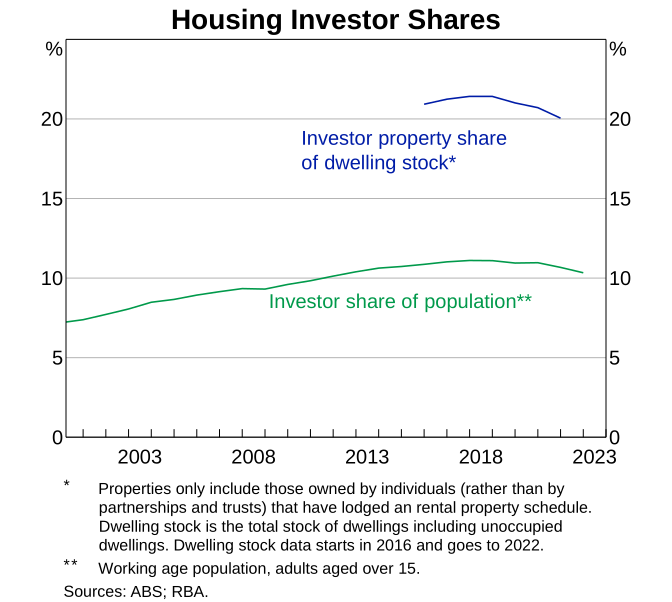
As at 2022/23, there were 2.3 million individual housing investors,
equivalent to roughly 10 per cent of the working-age population. This number is consistent with
previous work using semi-aggregate ATO taxation statistics (RBA 2017). Investment properties accounted
for around 20 per cent of the dwelling stock. The share of investors relative to the working-age
population rose steadily over the 2000s and 2010s, but has been broadly stable, more recently
(Graph 1).
Graph 1
Individual investor characteristics
Most housing investors own a single investment property
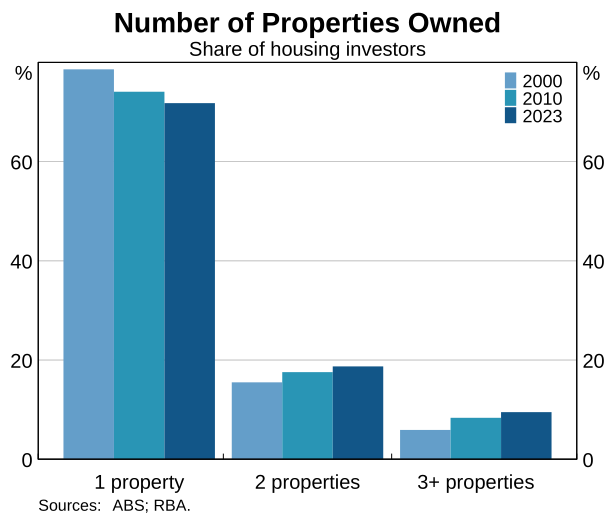
As at 2022/23, around 70 per cent of housing investors owned just
one investment property. The remaining 30 per cent owned multiple properties, though those with
multiple investment properties owned around half of all investment properties. The share of investors
owning more than one property has increased by 7 percentage points over the past two decades
(Graph 2).
Graph 2
The financial stability issues associated with housing investors holding multiple properties are nuanced.
Owning multiple properties can provide benefits during a negative economic shock, from diversifying
income streams and asset values. However, investors holding multiple properties tend to carry more debt.
Resilience could be undermined if the portfolio of properties is highly leveraged (with little equity
cushion). In a negative shock, synchronised sales of highly leveraged investment properties could depress
the value of all properties (given prices are set at the margin) and thus amplify the housing price cycle
in a downturn. Any diversification benefits from holding multiple investment properties could also be
foregone if these holdings were geographically concentrated or similar in type.
Owners of multiple properties tend to own investment properties in a single state
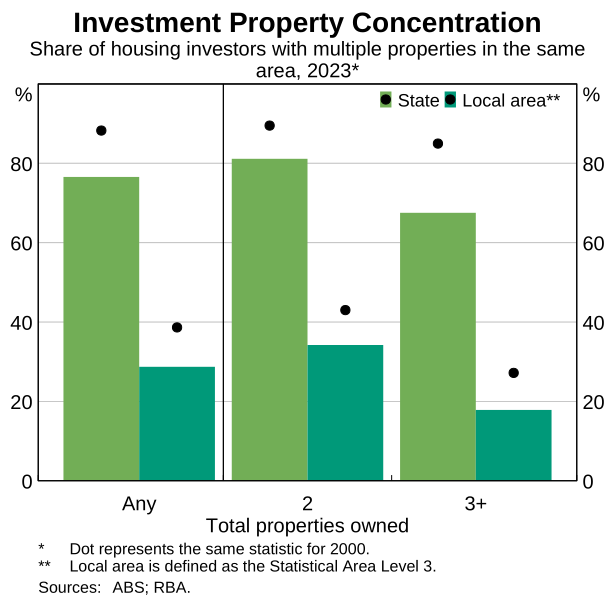
Around 80 per cent of housing investors who own multiple properties hold them in the same state
or territory (Graph 3). In addition, a more granular view of concentration risk
shows around 30 per cent of multiple property owners hold all their investment properties
within the same local housing market. Translated to the overall stock of investors,
8 per cent own multiple properties that are located in the same local housing market. Both the
state and local housing market concentration measures suggest substantial geographic concentration in
investment property portfolios, although investors who own more properties tend to be a bit more
geographically diversified. Relative to 1999/2000, investors have steadily
become less geographically concentrated in their property holdings. This could reflect lower frictions to
out-of-area purchases as buyer agents and cross-state property management have become more prevalent, and
property listings have become more available online.
Graph 3
The more geographically diverse a housing investors holdings are, the less vulnerable they are to
localised economic downturns, natural disasters, or state-specific regulatory changes. In line with this,
regions close to each other tend to experience similar cycles of listing activity, vacancy rates, rental
yields, and housing prices. On the other hand, investing across state borders could be riskier if
investors have less knowledge of distant property markets.
Housing investors tend to be older and higher income earners
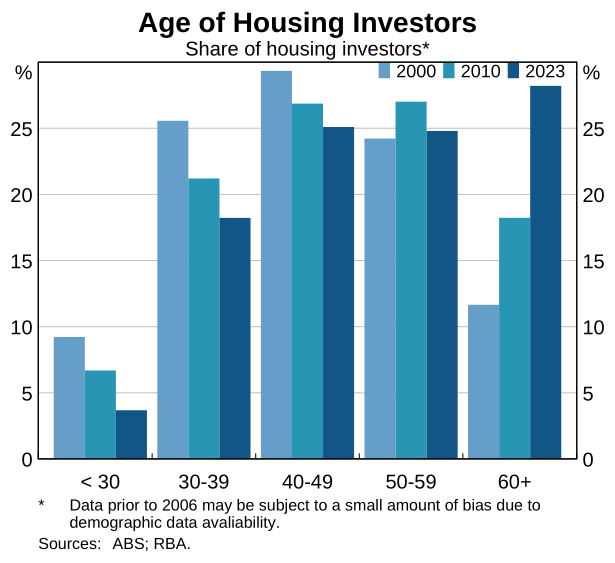
The median age of housing investors increased from 45 to 51 years between 1999/2000 and 2022/23. Over this period, the
share of housing investors aged over 60 years has risen from 12 to 28 per cent
(Graph 4). This shift reflects both broader population ageing and an increasing incidence of
property ownership among older cohorts, with around 40 per cent of the change attributed to
broader population ageing.
Graph 4
There has been a notable increase in the share of housing investors aged over 60 with a mortgage over
recent decades. However, only around half of investors in these older cohorts had a mortgage against
their investment property in 2022/23 (materially below the figure for
younger cohorts). In addition, the average retirement age has risen over time, and so older investors are
more likely to still be working (even if they are working fewer hours and earning less labour income).
Older investors may also have greater accumulated wealth or supplementary sources of income, including
from superannuation portfolios, other financial assets held outside the superannuation system, and
pensions. That said, a large decline in the value of asset portfolios (from which income streams are
drawn) could reduce the financial resilience of some older investors in the event of an economic
downturn.
Alongside the increasing age profile of housing investors, as a group they tend to be higher income
earners. Higher
income earners are much more likely to own investment properties than those on lower incomes. In 2022/23, the highest income quintile accounted for nearly
40 per cent of all housing investors in Australia. Over the past decade, investor participation
has become marginally more skewed towards higher income households away from the middle of the
distribution (Graph 5).
Graph 5
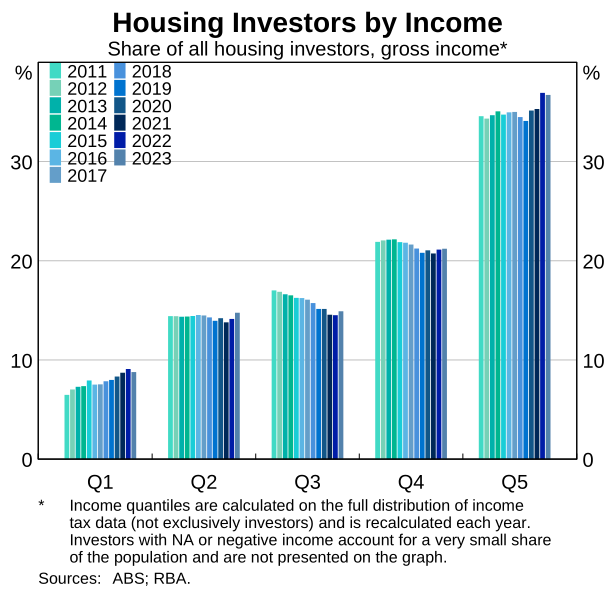
Several factors explain the large share of high-income housing investors. Higher income investors have
greater borrowing capacity and have benefited more from tax concessions such as negative gearing and
capital gain discounts. Rising property prices have lifted entry costs, making housing purchases harder
for lower and middle-income households over time. For stability of the Australian financial system as a
whole, the prevalence of high-income investors is a source of resilience. Higher income households also
spend a smaller share of their income on essential expenses, giving them greater capacity to absorb
shocks, and they have historically been less likely to become unemployed (RBA 2023b; RBA 2024).
Negative gearing and using leverage are common among housing investors
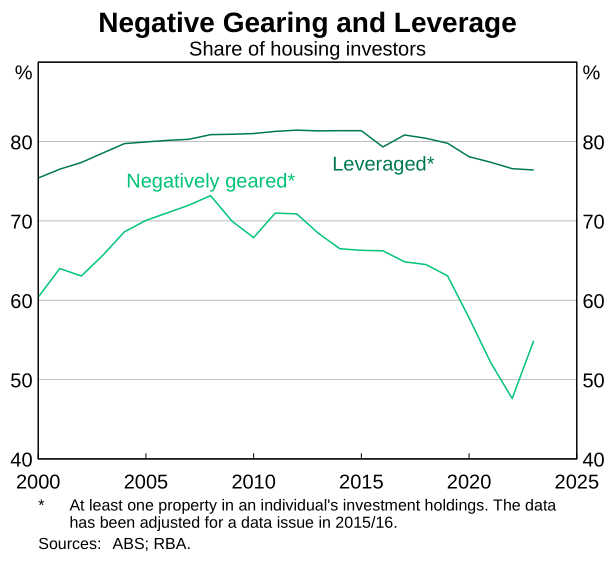
The share of housing investors with at least one negatively geared property rose in the period prior to
the global financial crisis, declined over the subsequent decade, before increasing again more recently
(Graph 6). Movements in the share of negatively geared investors have largely reflected changes in
interest rates. Lower rates reduce interest expenses and therefore shift some investors from being
negatively to positively geared. Given the substantial rise in interest rates since 2021/22, this trend has started to reverse and the share of negatively geared
investors is likely to have increased further over recent years.
Graph 6
Many housing investors negatively gear their properties to avail of tax deductions on interest and other
property-related expenses, with the expectation that long-term capital gains will outweigh short-term
losses. However, this reliance on future price growth can leave investors exposed to changes in interest
rates, housing demand, and broader macroeconomic conditions. In a downturn, rental income could also be
disrupted. This reliance on capital gains alongside negative cash flows may make investors more likely to
sell during a downturn or when expectations of future price growth are reassessed. However, negative
gearing is more prevalent among higher income investors and less common in older cohorts, which somewhat
offsets this channel as a source of potential vulnerability. These investors are likely to have greater
capacity to absorb shocks.
The share of housing investors with at least one leveraged property – that is, a property with an
outstanding loan balance – has remained relatively stable and is high at around
80 per cent of investors. A slight decline in more recent years likely reflects an increasing
share of older investors, who may have already paid off their housing debt and therefore have lower need
and capacity to borrow from banks. The absence of a material change in this share is consistent with
broadly stable investor credit profiles. A significant increase over a number of years, if it were to
occur, could potentially point to rising indebtedness within the investor segment or a shift towards
riskier borrowing behaviour. While the share of investors who are leveraged has remained broadly stable,
the share of highly leveraged investors may have shifted over time, potentially affecting overall risk.
While possible to examine, this is beyond the scope of this article.
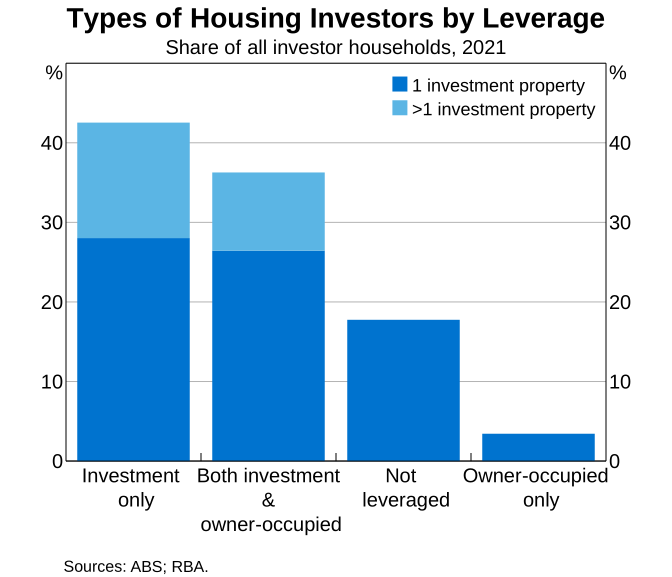
Over one-third of investor households have an outstanding loan on both their investment property and
primary residence
As discussed above, the aggregate share of housing investors who are leveraged has been relatively stable.
For the years in which Census data are available (e.g. 2021, 2016), we can examine a snapshot of the
distribution of leverage across both investment properties and owner-occupier dwellings. These data are
not directly available in PLIDA-WHAM and are therefore estimated. For investor loans, estimates use
reported interest expenses from rental property schedules, while for owner-occupier loans they use
reported mortgage repayments from the Census. In both cases, estimates rely on an assumed interest rate
path and a few assumptions (see Appendix A for details).
At the household level, most investor households have a leveraged investment property and around one-third
have leverage on both their investment and owner-occupier properties (Graph 7). For
households with investor leverage, around one-quarter have more than one investment property.
Graph 7
Housing investors with multiple loans must service them concurrently. If these investors are more indebted
overall, this would make them more sensitive to shocks due to higher repayment obligations. However,
there is some important nuance here. It is possible that an investor household with debt allocated across
only investment properties could be more resilient than a household with a similar amount of debt used to
purchase an owner-occupied dwelling because the former earns rental income on their investment
properties. Leveraged investors could also service a loan with a higher overall debt-to-income (DTI)
ratio compared with other borrowers because interest deductibility can be factored into their loan
serviceability assessment. It is also possible that an investor selling their investment property to
extinguish their debt could be less disruptive to them (although their tenants could be disrupted) than
an owner-occupier selling and moving out of their primary residence. Further, all investors would be
subject to serviceability tests as each loan commences, based on the combined loan servicing costs from
all of their loans.
Housing investors tend to have higher amounts of leverage than other types of borrowers
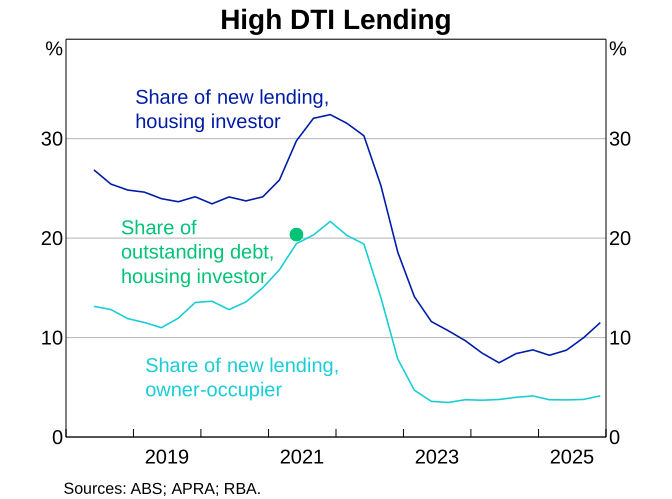
Based on data as of 2021, around 20 per cent of leveraged housing investors had a housing DTI
ratio above 6 when considering their outstanding debts on all their investment properties as well as
their owner-occupied dwelling. This corresponds to a time when the flow of new high DTI lending for
investors had been strong for some time (Graph 8). Flows of high DTI lending have since decreased,
suggesting investor leverage may have declined since then. The RBA and the Australian Prudential
Regulation Authority (APRA) consider a DTI above 6 to be of higher risk (APRA 2025).
Graph 8
The share of housing investors with high outstanding DTI in 2021 suggests investors not only choose to
take on high leverage initially but also tend to amortise their loans more slowly than owner-occupiers.
This is consistent with investors more frequently using interest-only mortgage terms and presumably
reflects tax incentives. More broadly, borrowers with higher levels of
outstanding debt relative to their income tend to be more vulnerable to shocks. At the same time,
investors tend to have other features that offset this vulnerability such as higher incomes, rental
income, and characteristics that make them a lower risk of becoming unemployed (RBA 2024).
Investor households with owner-occupier debt tend to be more indebted
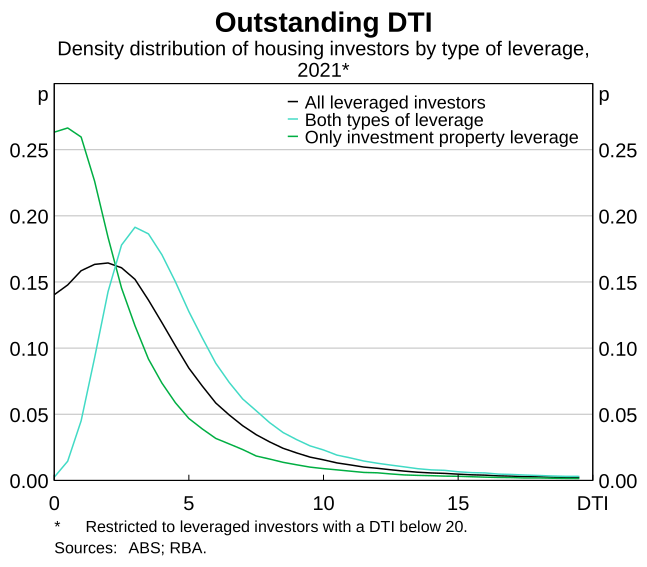
Households with both investment property and owner-occupier debt are more likely than households with only
investor property debt to have high levels of debt relative to their income (Graph 9). Households
with both investor and owner-occupier loans tend to have higher DTI ratios, such that these borrowers
account for around 70 per cent of the investor households with outstanding debt to income
ratios above 6.
Graph 9
Households with a single leveraged investment property tend to hold the smallest amount of debt, around
$220,000 for the median household (Table 1). The highest levels of debt tend to be held by
households with multiple investment properties and a leveraged owner-occupied dwelling. This group
accounts for only 10 per cent of investor households but hold a median of $1 million in
outstanding debt. Notably, housing investors with at least two investment properties and no
owner-occupied debt hold less debt, on average, than investors with one investment property and a
leveraged owner-occupied dwelling, despite the former group owning at least as many properties, if not
more. Households with investor and owner-occupier debt are also more indebted relative to their income,
compared with households with only investment property debt.
|
Outstanding total Median, rounded to nearest thousand |
Outstanding DTI Median, rounded to one decimal place |
|
|---|---|---|
| Single investment property | ||
| – No owner-occupier loan | $224,000 | 1.6 |
| – Owner-occupier loan | $655,000 | 4.1 |
| Multiple investment properties | ||
| – No owner-occupier loan | $498,000 | 3.2 |
| – Owner-occupier loan | $1,054,000 | 5.9 |
|
Sources: ABS; RBA.
|
||
The results indicate that outstanding debt increases with not only the number of leveraged properties but
also depends on which property type the debt is associated with. It could be the case that a housing
investors owner-occupier dwelling is more likely to be higher value and hence have larger
associated debt than their investment property. For example, a households investment property could
be an apartment with a higher rental yield but lower value than their owner-occupied stand-alone house.
However, debt recycling, where households deploy some of the equity in their owner-occupier loan for
investment purposes, may blur the distinctions between the two property types an investor could hold.
Depending on how households are responding to the Census question on mortgage expenses for their own
home, this may lead to upward bias on our estimates of outstanding debt (see Appendix A for
details).
Debt levels increase with income while DTI decreases
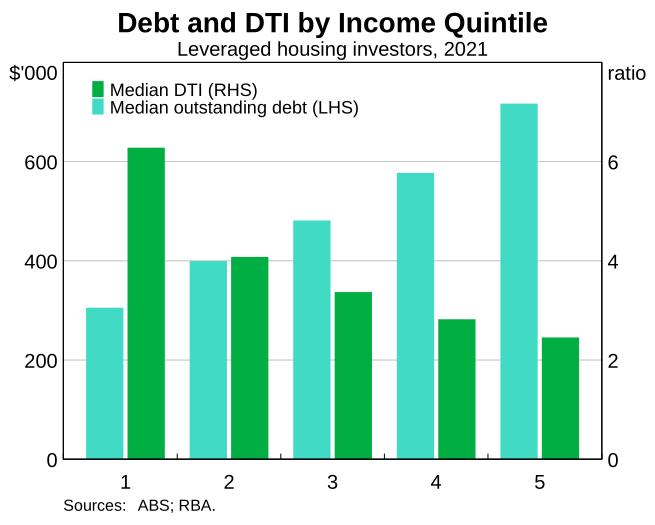
The highest income quintile holds median outstanding debt of around $720,000, compared with around
$300,000 for the lowest income quintile (Graph 10). This reflects a greater capacity of the higher
income quintile to service larger loans. However, increases in loan size across the income distribution
are not proportional to increases in income.
Graph 10
The income quintiles are constructed using the investor household population, who typically have higher
incomes than the broader population. As a result, the lowest income quintile does not correspond to a
typical low-income non-investor household. Nevertheless, the data indicate that lower income
investors tend to be the most indebted relative to their income. While this group may represent a segment
of vulnerability to monitor, it does not necessarily constitute a source of systemic risk.
Conclusion
Newly released data from ABS PLIDA-WHAM provides the most comprehensive view to date of housing investors
in Australia. The dataset covers the full population of housing investors and allows a more granular
assessment of investor heterogeneity and how key characteristics have evolved over time. This materially
richer evidence base strengthens the RBAs understanding of investor behaviour and associated
financial stability risks.
Overall, housing investor characteristics have remained broadly stable over the past 20 years, a
period in which housing investors have defaulted at lower rates than owner-occupiers. Investors continue,
on average, to have higher incomes, and appear well placed to service their loans, supporting assessments
of ongoing investor creditworthiness. These characteristics have historically underpinned investor
resilience, even if investor activity can potentially contribute to an increase in housing-related
vulnerabilities by amplifying housing and credit cycles.
At the same time, these data highlight areas of potential vulnerability that warrant monitoring in the
period ahead. The housing investor population is ageing, which could reduce resilience in a downturn due
to the extent that some of these investors may be relatively more reliant on rental income. In addition,
around 20 per cent of investors had high DTI ratios in 2021, suggesting there are pockets of
elevated leverage that could be more sensitive to adverse income, interest rate or housing price shocks.
At the same time, high DTI investors could be more resilient to shocks compared with other high DTI
borrowers given their relatively higher incomes, diversified collateral, and the ability to sell their
property with less disruption to extinguish their debt.
This article presents a large body of descriptive analysis on investor households in Australia,
highlighting a range of investor characteristics, some of which point to potential sources of
vulnerability while others underscore why loan arrears have remained relatively low for many years. While
the facts presented have offsetting implications for financial stability, on balance the evidence points
to a resilient housing investor population. Future work will examine how these data can be used in
applications of dynamic modelling, including to test how investor households would cope with an adverse
macroeconomic shock involving shocks to incomes, asset prices and interest rates. This analysis is part
of a program of work aimed at deepening the RBAs understanding of the changing nature of
vulnerabilities in the Australian financial system.
Appendix A: Further detail on leverage estimation
Estimating investment property portfolio leverage
For each investment property, a housing investor reports claimed interest expenses on the rental property
schedule of their tax return. These interest expenses are a function of the outstanding loan balance and
the applicable interest rate. From this fact, an investors outstanding loan balance is estimated
using the following relationship:
This provides a reasonable estimate of debt on average, conditional on the assumed interest rate being
representative of rates faced by investors.
There are, however, important caveats. Actual interest rates vary across borrowers, with some investors
facing rates above or below the average. For example, due to differences between fixed and variable rates
or discounted loan products.
Estimating private dwelling leverage
Households report monthly mortgage repayments for their primary residence in the Census. These reported
repayments are used to estimate outstanding mortgage debt, applying an approach based on a
Credit-Foncier-style loan structure. This assumes fixed, regular repayments that cover both principal and
interest, with the loan fully amortised over its term.
Under this structure, repayments follow an amortising schedule: each payment services the interest due and
reduces the outstanding principal. Over the life of the loan, the interest component of repayment
declines while the principal component increases, although the total repayment remains constant.
The estimation takes place in two stages.
Stage 1 involves estimates of the initial loan amount given a reported monthly repayment
and an assumed interest rate path. The method applies a reverse amortisation approach, starting from the
end of the loan term (where the outstanding balance is zero) and working backwards month by month to the
loan origination date. In each iteration, the opening balance for a given month is set equal to the
closing balance from the preceding month, after which the applicable interest rate for that month is
applied.
For each month, this method:
-
Computes interest paid in the month:
-
Computes the principal component in the month:
-
Updates the previous balance:
This process continues until the starting month is reached, giving an estimate of the initial loan
balance.
Stage 2 involves projections of the loan balance forward from the origination date using
the initial loan amount estimated in Stage 1. For each month, the applicable interest rate is applied to
the outstanding balance to determine the interest component and the remaining as the principal payment.
The balance is then updated. This process is repeated sequentially for each month until the specified
point in time is reached. The calculation mirrors the structure of Stage 1 but is implemented in the
forward direction.
For each month, this method:
-
Computes interest paid in the month:
-
Computes the principal component in the month:
-
Updates the next balance:
Assumptions
Several assumptions are required to implement the owner-occupier estimation:
- Loan term: The term is assumed to be 30 years for all loans, consistent with
standard practice in Australia. - Loan start date: The date is set to the earliest year household members recorded an
address as their residence. To accurately assess the date, only residence periods commencing after
1 January 2006 are considered due to the availability of location data. - Interest rate: All loans are assumed to follow the same interest rate path for a
given loan period. Beyond the last observed value, rates are assumed to remain flat. - Mortgage repayments: Census data provide monthly repayments, which are assumed to
remain fixed over the loan term (this implies that households do not make additional repayments to
lower their loan balance).
Interest rate
The choice of interest rate is critical to estimating both owner-occupier and investment housing debt. The
most representative measure of the interest rate faced by borrowers is the average of actual rates on
outstanding loans, published in RBA Statistical Table F6 (RBA n.d.). However, this series is only
available from July 2019. To extend the history, we use advertised rates from RBA Statistical
Table F5 (RBA n.d.). Using outstanding loan rates from the securitisation dataset as a benchmark,
data from Table F5 are spliced back to extend the average outstanding rates series back to
1959. For simplicity, we assume constant fixed-rate loan share of 17 per cent (the observed
average based on securitisation data), which is used to create a weighted average of the fixed and
variable discounted interest rates. Separate interest rate paths are constructed for owner-occupiers and
housing investors using the same approach.
Debt recycling
In Australia, tax deductibility is determined by the purpose of the borrowed money, not the property the
loan is secured against. For a household that owns both an owner-occupied property and an investment
property, debt recycling means they aim to turn part of their non-deductible home loan debt
(owner-occupier leverage) into tax-deductible investment debt.
A household that has accumulated equity in their non-deductable owner-occupier loan (by paying down their
loan balance and/or experiencing growth in the value of their collateral) can take some of this
accumulated equity secured against their primary residence to invest in an income-generating asset, such
as an investment property. The interest expenses for the portion of the loan used for this purpose are
tax deductable and would appear on an individual taxpayers rental schedule.
It is possible that when responding to the Census question on monthly mortgage payments on their primary
residence, respondents are reporting their entire mortgage expense, even if a portion of this has been
used to purchase an investment property and is also claimed as deductible interest on a rental schedule.
This could lead to some double counting in our estimation.
Household unit
An investor household is one where at least one household member has completed a rental schedule to
indicate that they have an ownership interest in an investment property. Leverage is calculated at a
constructed household level and incorporates both investment property and principal place of residence
debt. Household income is taken from the 2021 Census to be consistent with household size and
owner-occupier mortgage repayments.
The household construction shows 60 per cent of investor households comprise only one individual
with an interest in an investment property. This may reflect sole investment activity, ownership acquired
prior to household formation, or alternative ownership arrangements driven by tax or other
considerations. As the analysis relies on aggregated household-level liabilities and income, the
resulting estimates may differ from borrower-level measures produced by banks, depending on how debts are
distributed across individuals. Consequently, the derived DTI ratios are definitionally different from
the APRA measure. Nevertheless, a household-level view of debts and income may be more relevant in a
stress-testing context, where resources are typically shared within households.
References
Agarwal N, R Gao and M Garner (2023), Renters,
Rent Inflation and Renter Stress, RBA Bulletin, March.
Bradshaw N, J Hambur, M McCarthy, S Nash (2025), Overview
and Early Analysis of the New Wealth and Housing Asset Module (WHAM), ABS/RBA
Conference, June.
APRA (Australian Prudential Regulation Authority) (2025), Activating Debt-to-income Limits
as a Macroprudential Policy Tool, Information Paper, November.
RBA (Reserve Bank of Australia) (2014), Box C: Households Investment Property
Exposures: Evidence from Tax and Survey Data, Financial Stability Review,
September.
RBA (2017), Box B: Households
Investment Property Exposures: Insights from Tax Data, Financial Stability
Review, October.
RBA (2022a), Chapter 2: Household
and Business Finances, Financial Stability Review, April.
RBA (2022b), Chapter 2:
Household and Business Finances in Australia, Financial Stability Review,
October.
RBA (2023a), Chapter 3: Household
and Business Finances in Australia, Financial Stability Review, April.
RBA (2023b), Chapter 2:
Resilience of Australian Households and Businesses, Financial Stability
Review, October.
RBA (2024), Box:
Few Borrowers Would be at Risk of Default Owing to a Substantial Deterioration in Labour
Market Conditions, Financial Stability Review, September.
RBA (2025a), Chapter 2:
Resilience of Australian Households and Businesses, Financial Stability
Review, April.
RBA (2025b), Chapter 2:
Resilience of Australian Households and Businesses, Financial Stability
Review, October.
RBA (2026), Chapter 2:
Resilience of Australian Households and Businesses, Financial Stability
Review, March.
RBA (n.d.), Statistical Tables, Webpage.
Underlying data
This file contains all underlying data that are available for public release.
Underlying data


